Dispatch IQ Admin
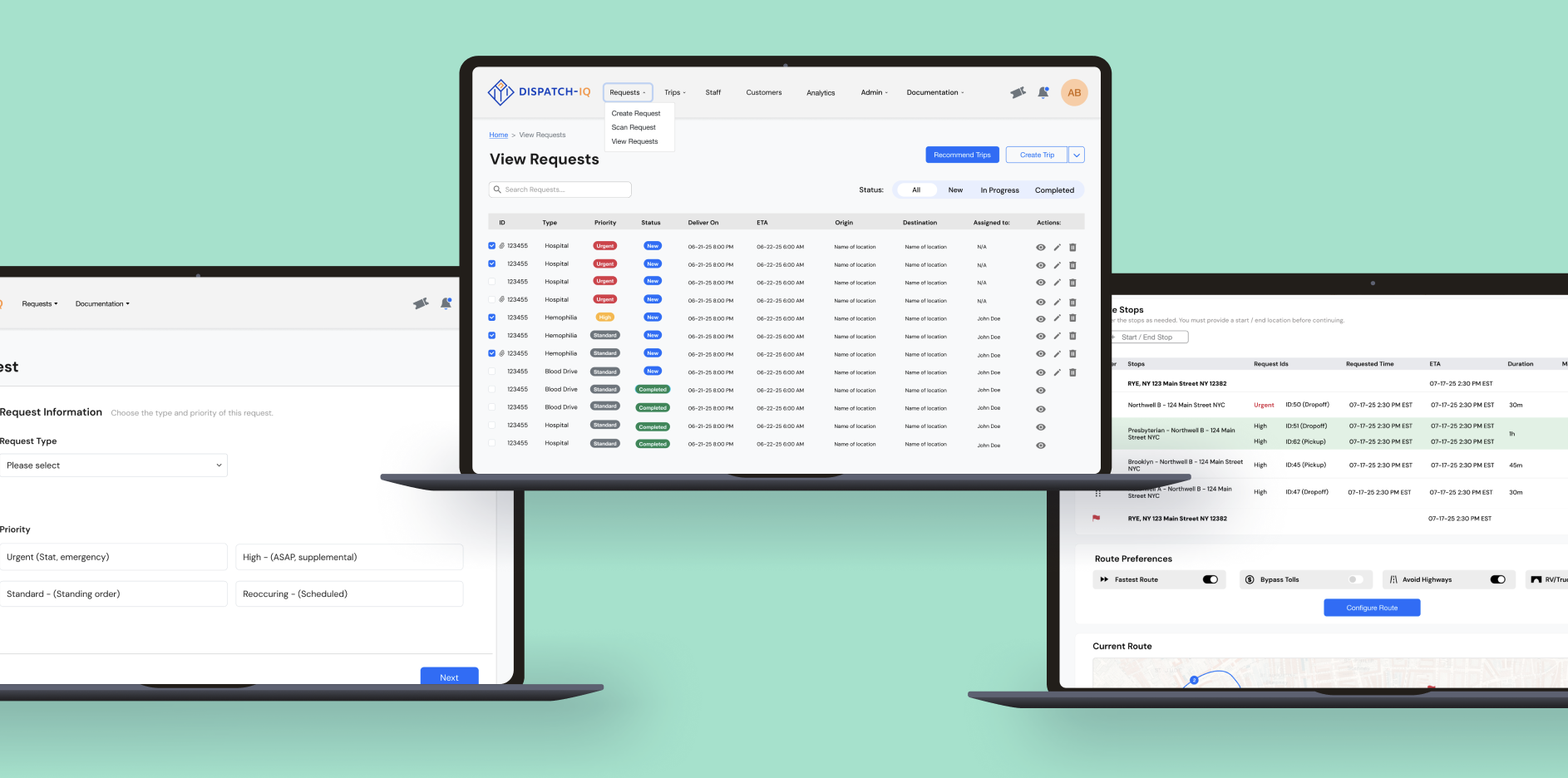
Designing a real-time logistics platform that helps dispatch teams coordinate drivers, shipments, and operations across a complex healthcare network.
Dispatch-IQ reinforced that operational software succeeds when complexity is organized—not removed. By collaborating closely with operations, engineering, and product teams, I designed a platform that balances real-time decision-making, technical constraints, and usability within a highly dynamic environment. The experience strengthened my ability to design enterprise systems where reliability, scalability, and speed are just as important as the interface itself.
OBJECTIVE
ROLE
Led end-to-end product design from discovery through implementation, partnering with Product, Engineering, Operations, Dispatch, Drivers, and Executive Leadership. Responsible for UX strategy, workflow design, dashboards, information architecture, prototyping, accessibility, design systems, and developer collaboration.
TEAM
Product • Engineering • Dispatch Operations • Drivers • QA • Executive Leadership
Start: May 2024
UAT: July 202
Production Release: February 2026
PROJECT TIMELINE
Responsive Web Application
PLATFORMS
XEnterprise Operations • Logistics • Real-Time Data • Route Management • Role-Based Permissions • Dashboard Design
FOCUS AREAS
Because Dispatch-IQ serves dispatchers, administrators, drivers, schedulers, and requesters, access control became a foundational part of the product architecture. I worked with engineering to define how authentication, permissions, and role assignment should work together, ensuring each user enters a tailored experience with access only to the tools and data relevant to their responsibilities.
DESIGNING FOR ROLE BASED WORKFLOWS
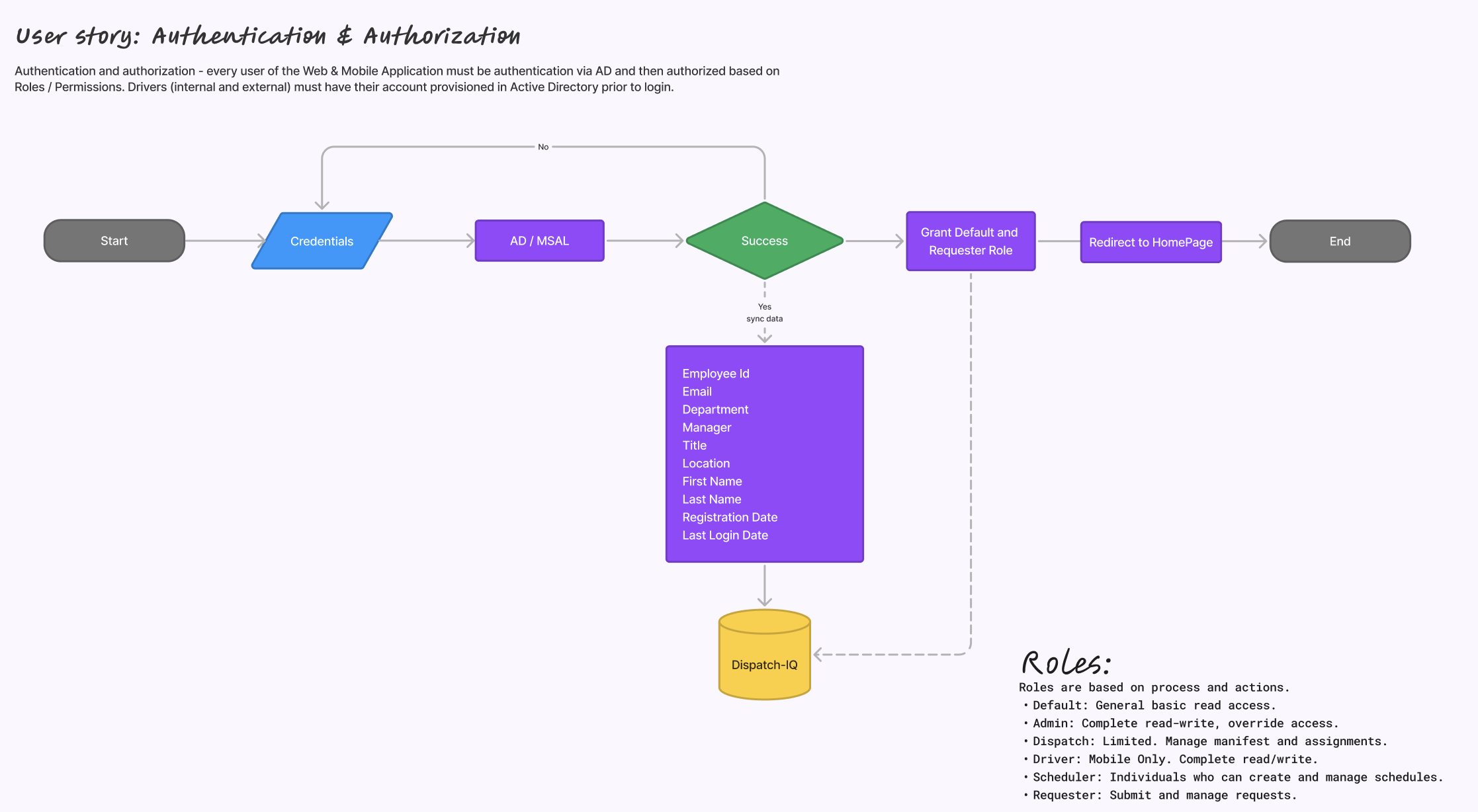
Dispatch-IQ was designed around a complete operational workflow that guides requests from submission through driver assignment and delivery. Mapping the end-to-end experience early helped align stakeholders, define system behaviors, and establish the product architecture before detailed interface design began. This workflow became the foundation for role-based permissions, automation, and operational decision-making throughout the platform.
DISPATCH REQUEST LIFECYCLE

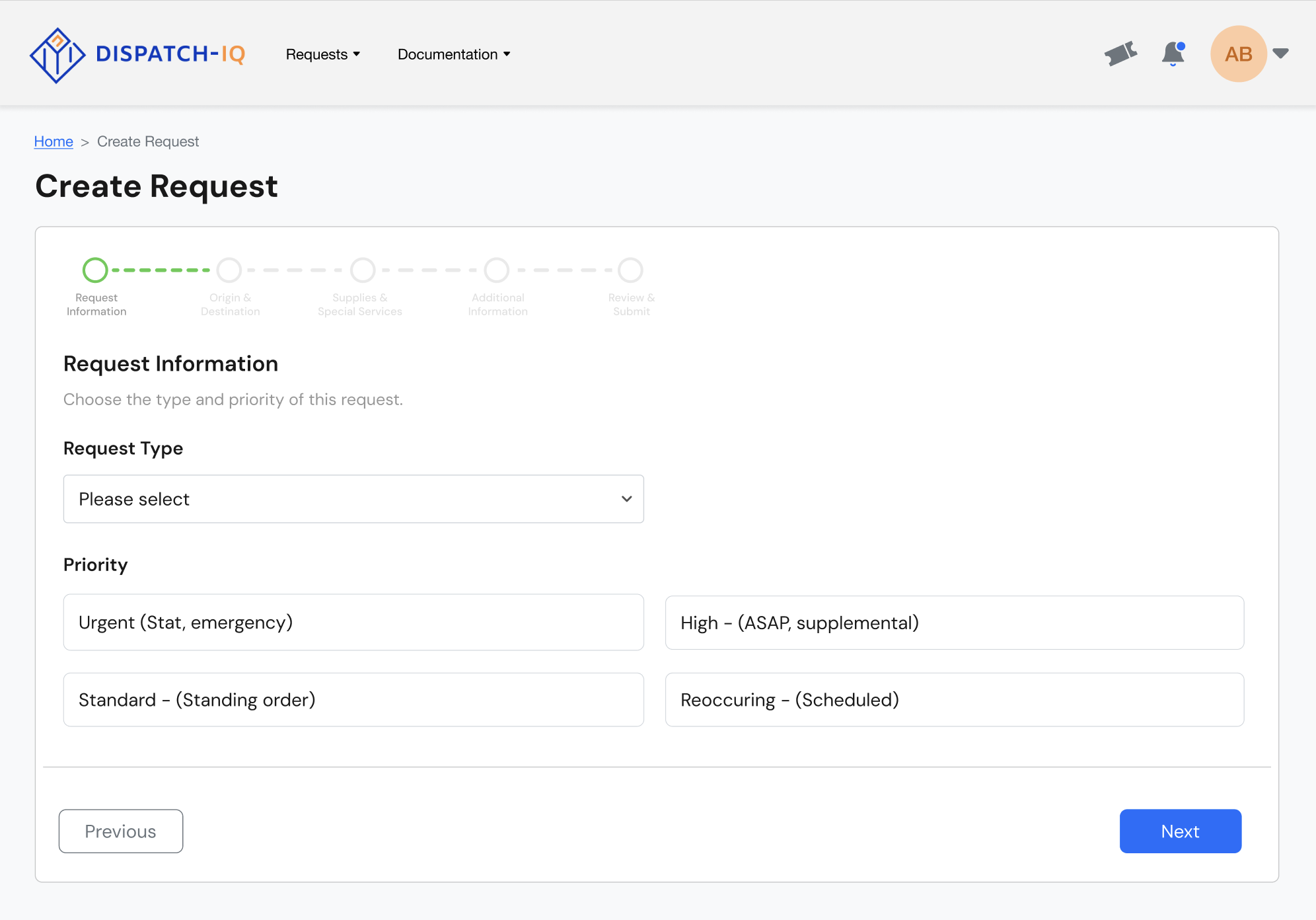
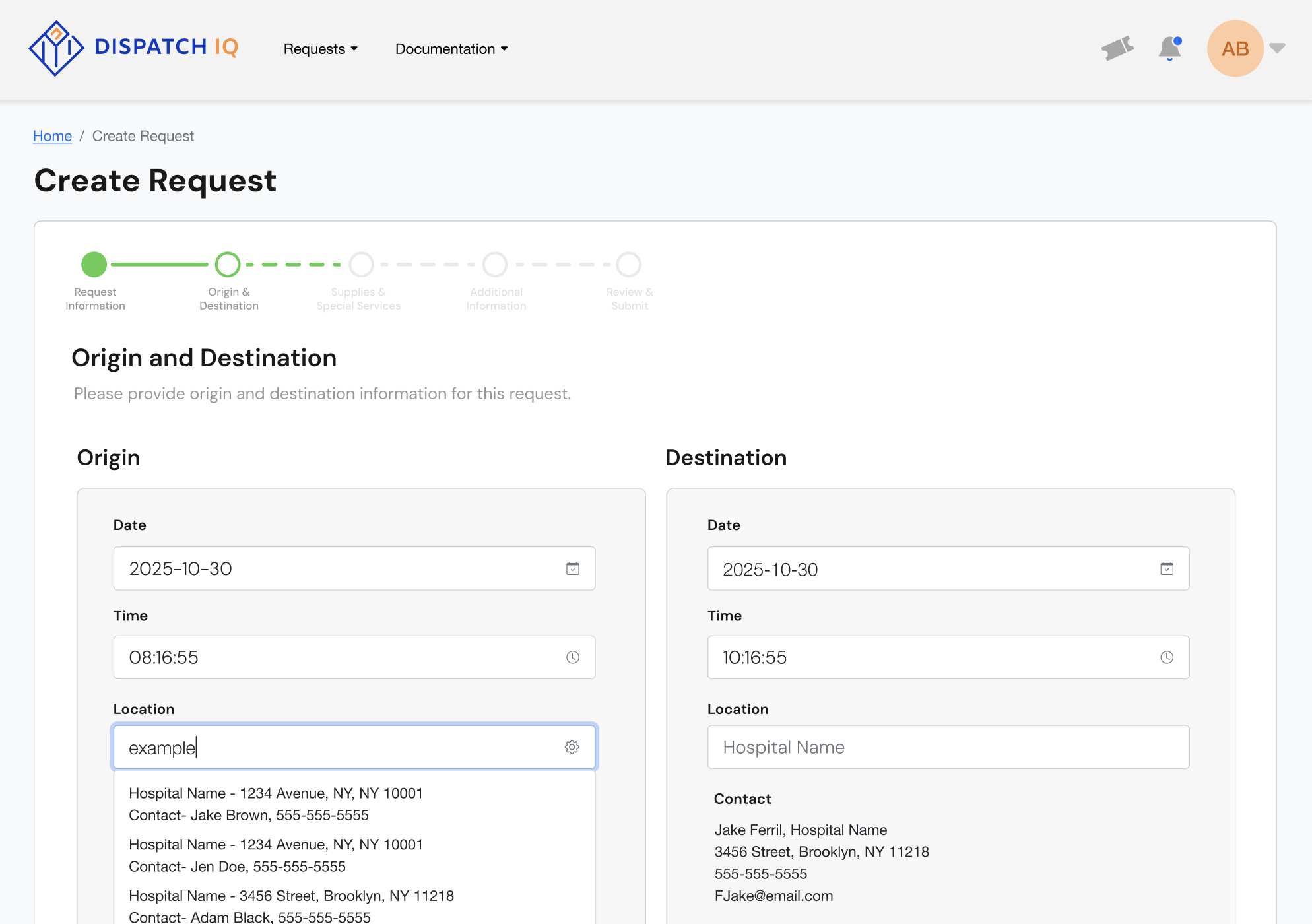
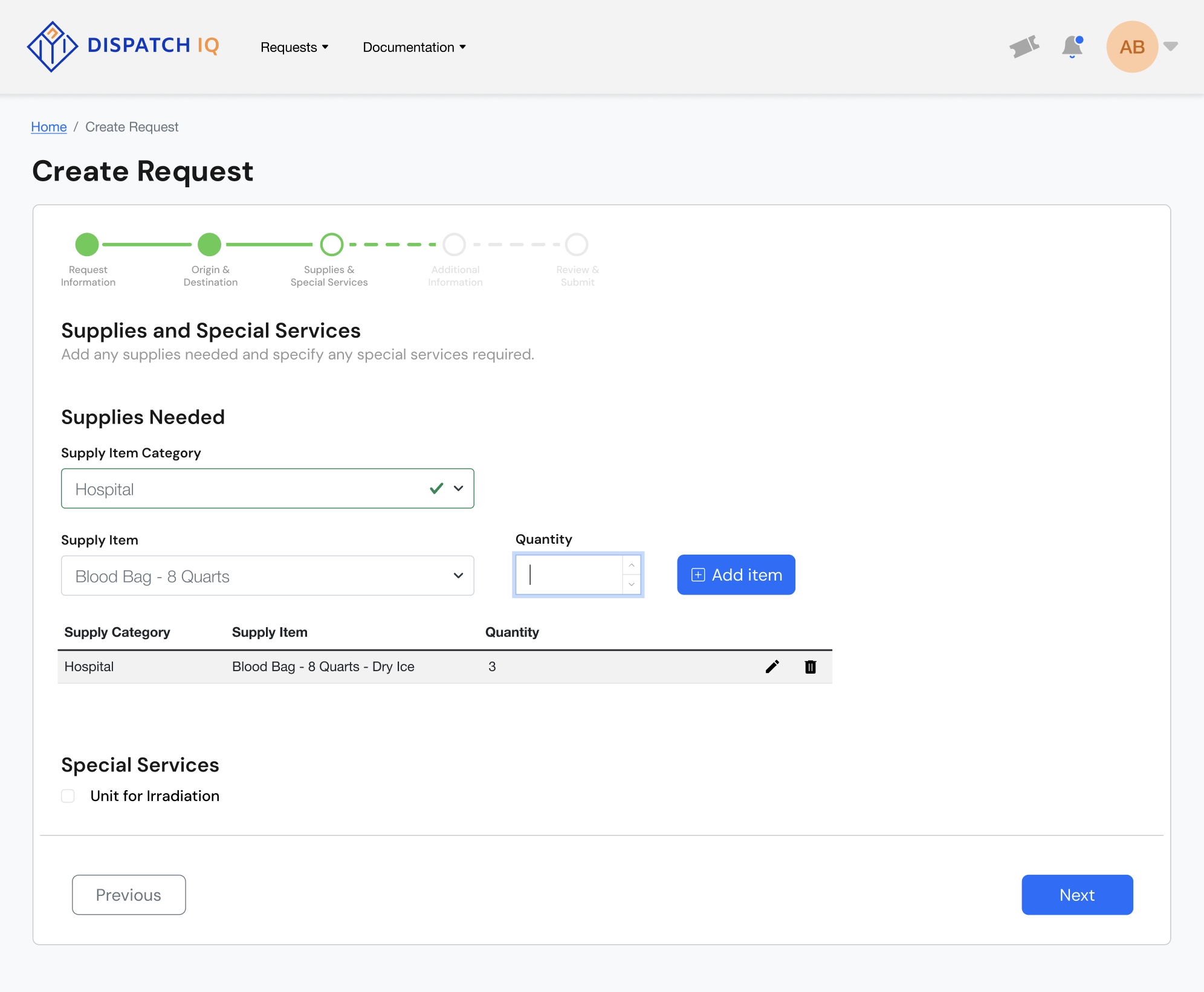
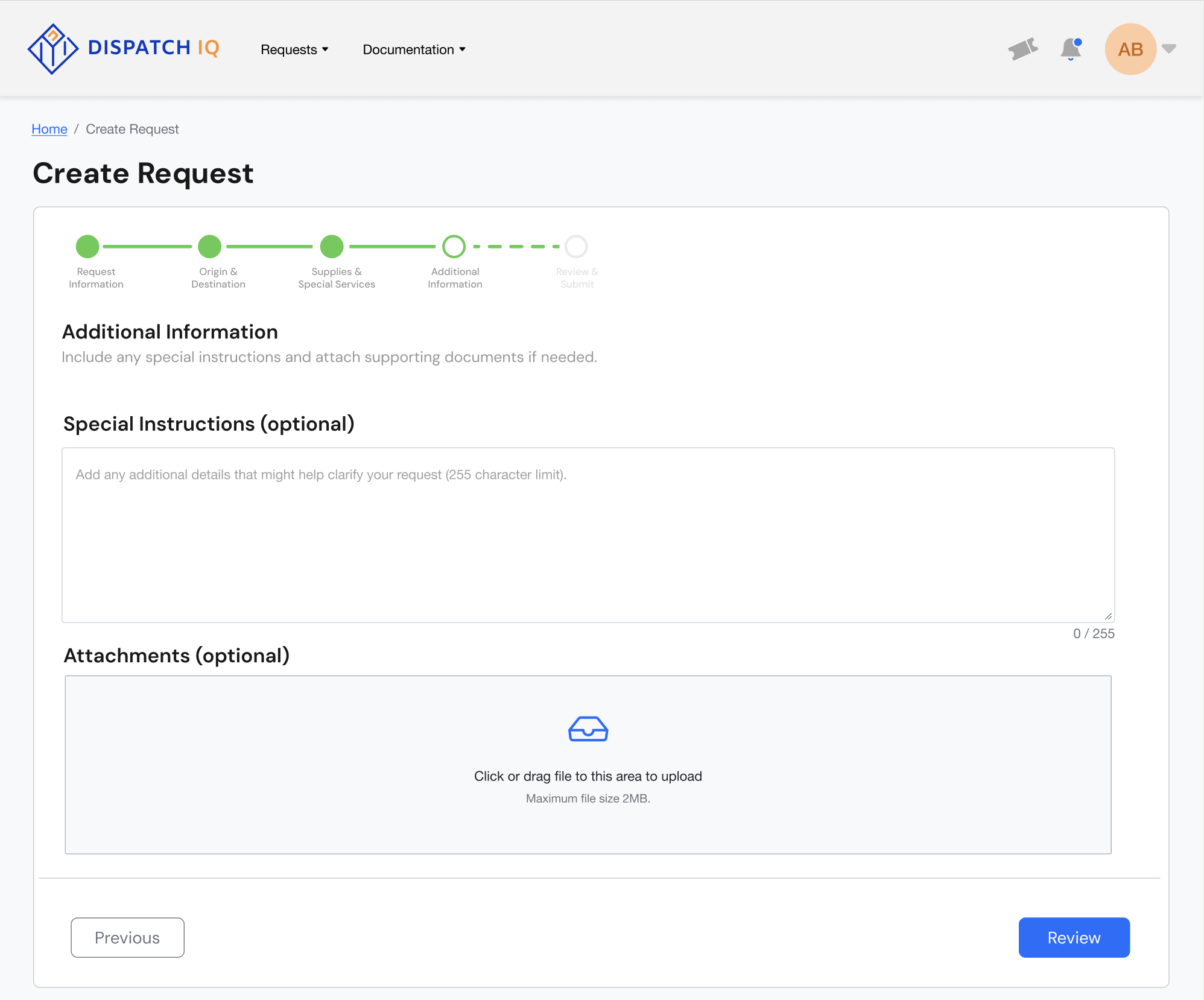
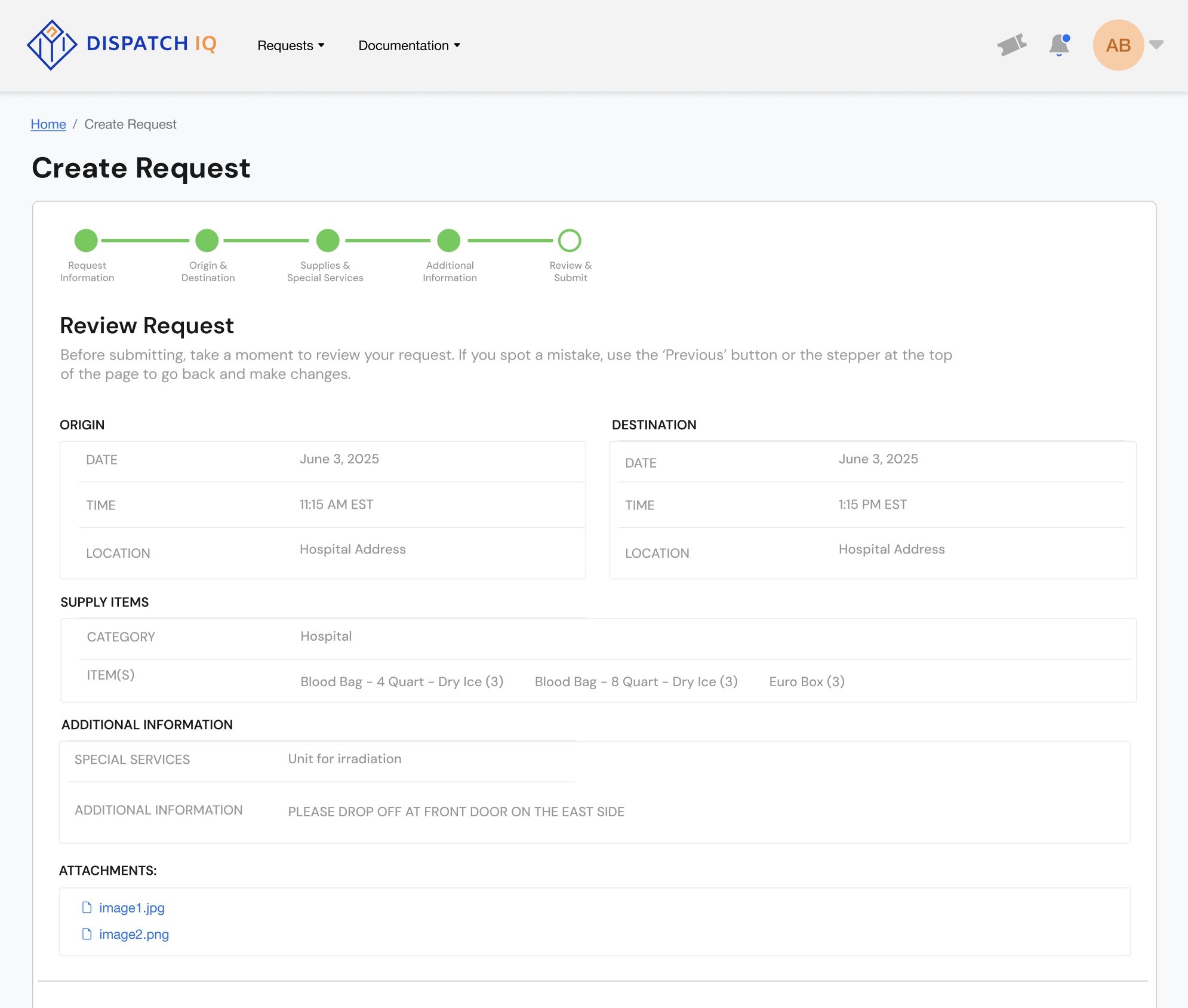
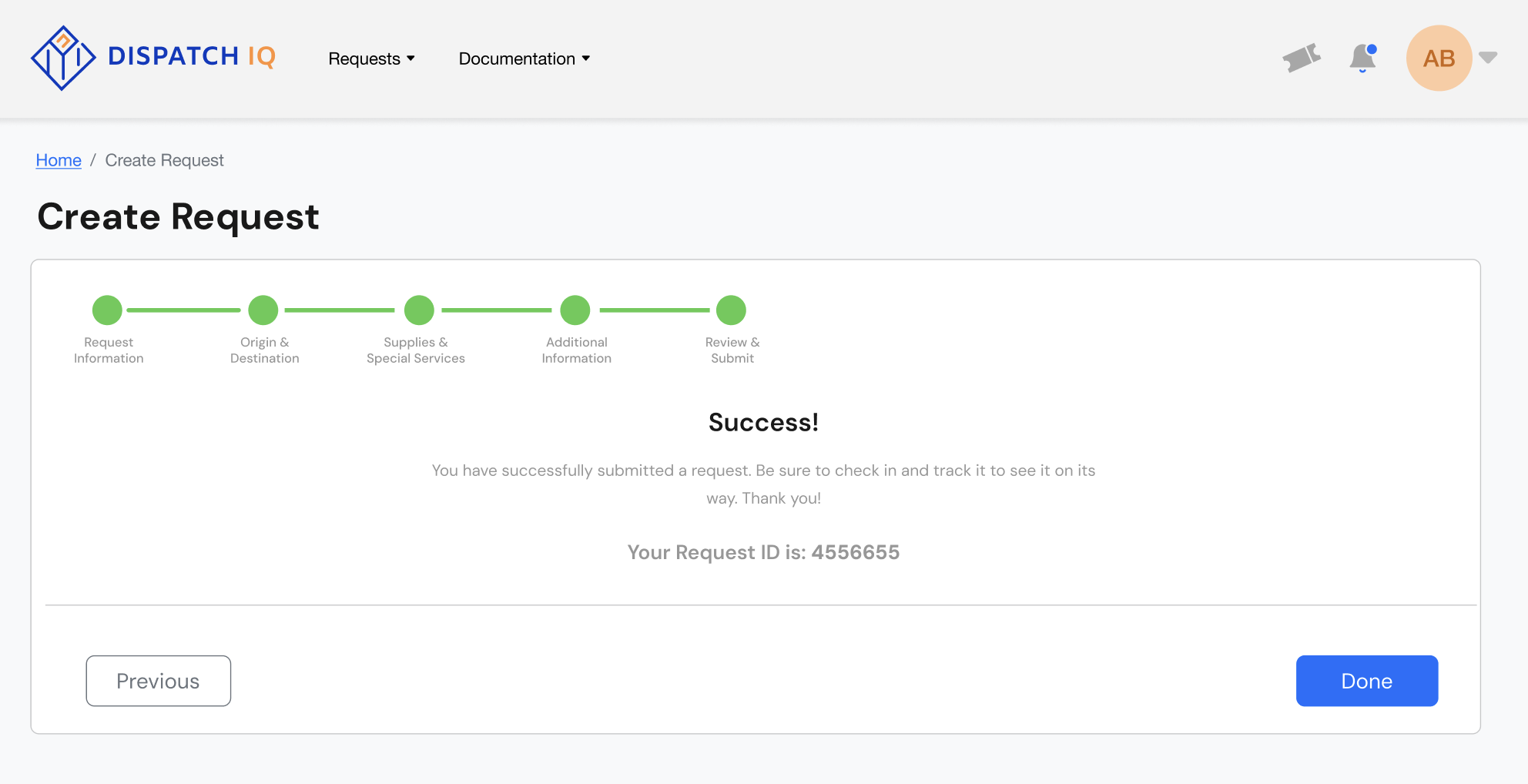
Designed the Request Creation Wizard to simplify high-stakes dispatch requests with a guided, step-by-step flow that adapts to request type and priority. Features like real-time validation, auto-save, and a single-page review reduce errors, lower cognitive load, and ensure reliable, standardized requests across NYBC.
CREATE REQUEST
-
![]()
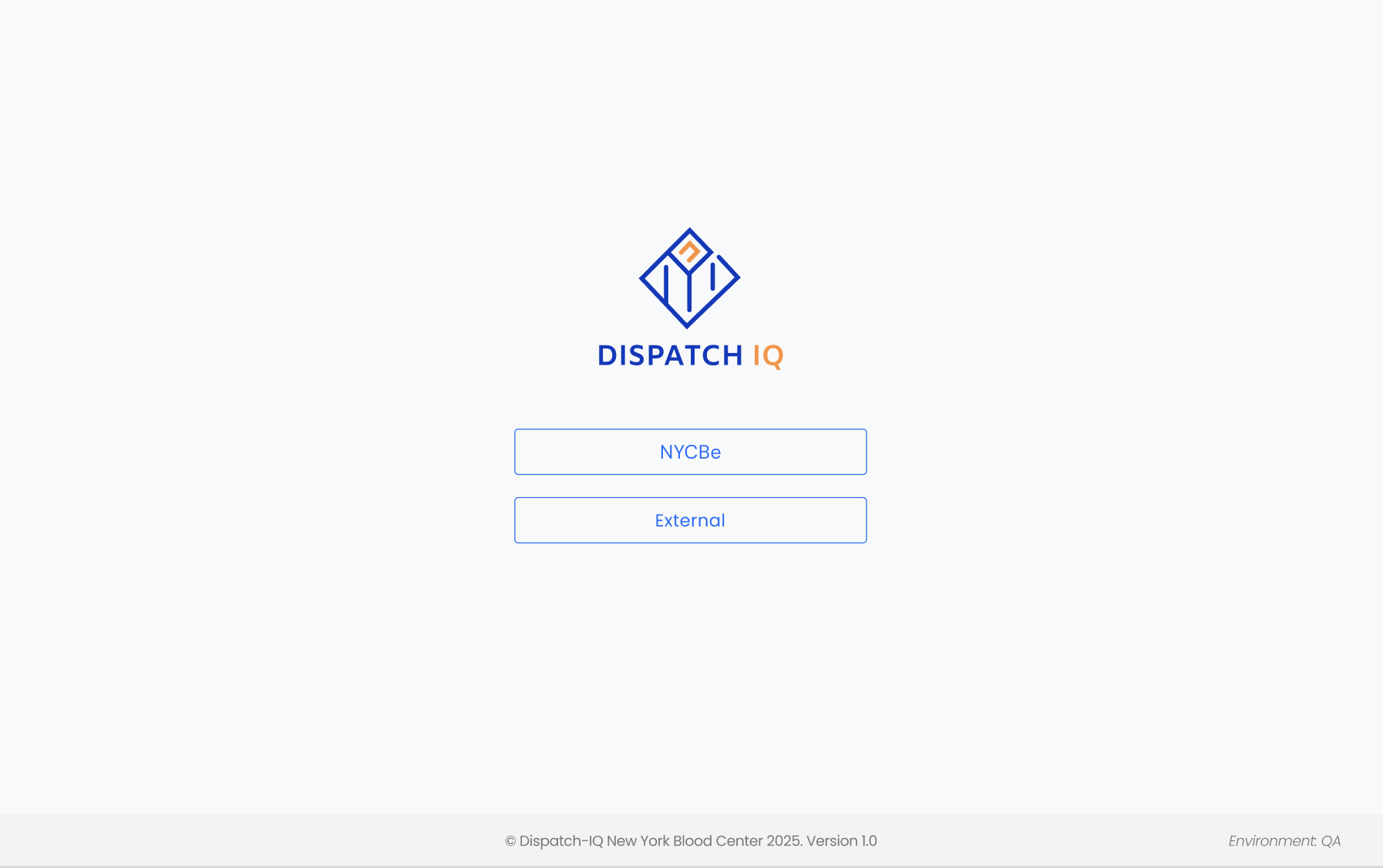
Dispatch-IQ Login
User signs in to access their role-based dispatch tools.
-
![]()
Request Information
User selects the request type and sets its priority.
-
![]()
Origin and Destination
User enters where the pickup starts and where it must go.
-
![]()
Supplies and Special Services
User chooses required supplies and handling needs.
-
![]()
Additional Information
User adds notes or uploads supporting attachments.
-
![]()
User reviews all details and submits the request.
Description goes here -
![]()
Successfully Created
User receives confirmation or is prompted to fix errors.
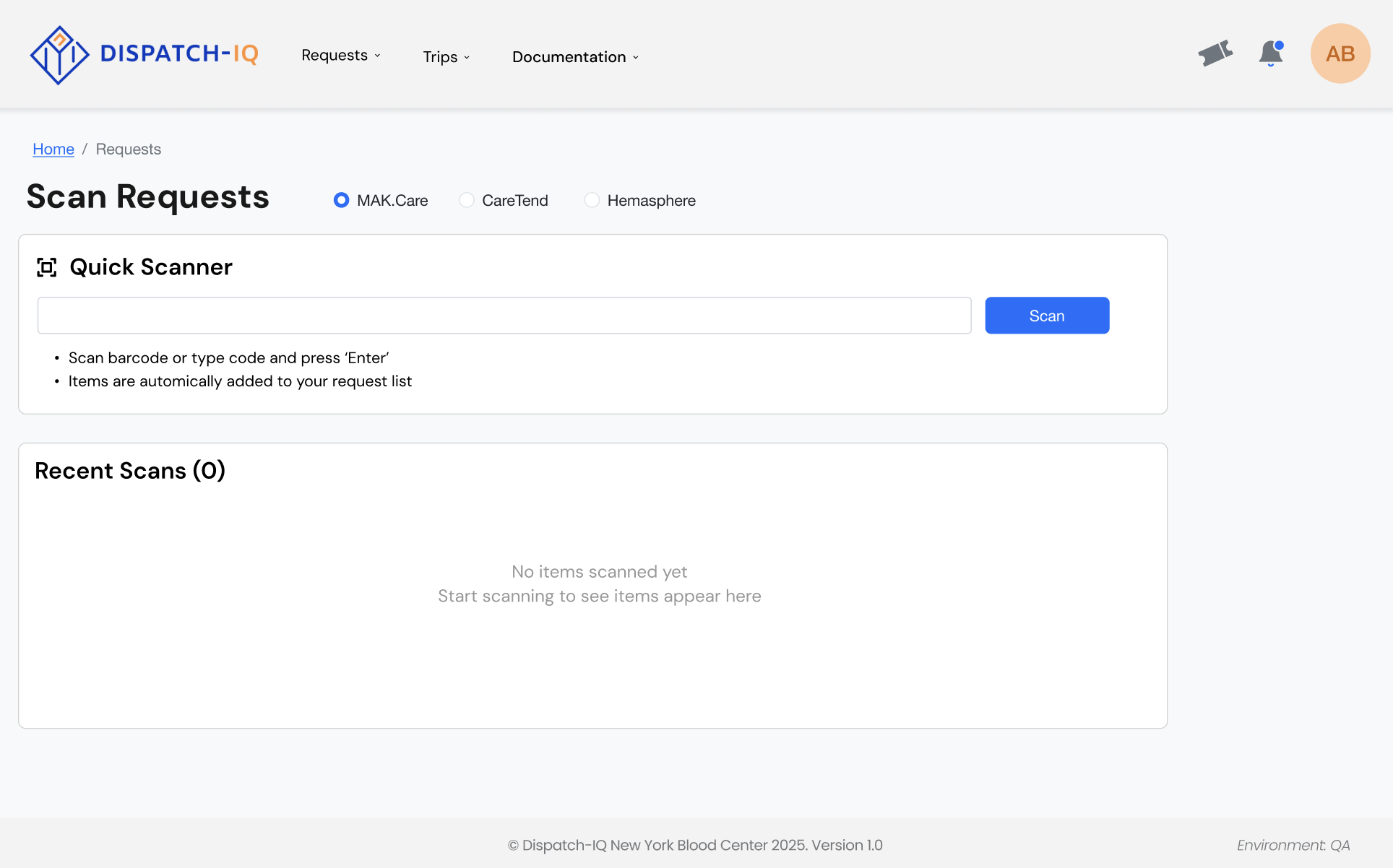
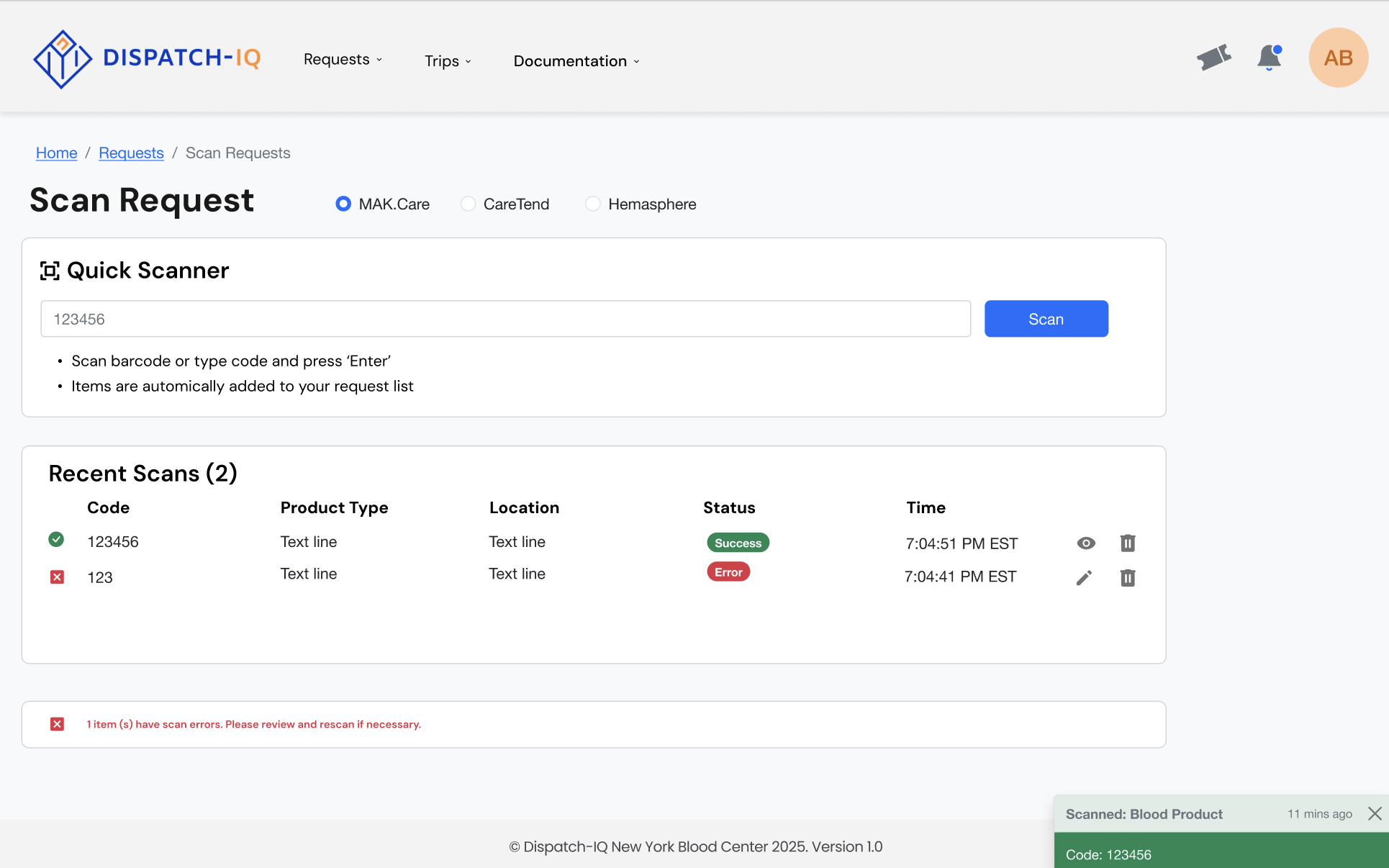
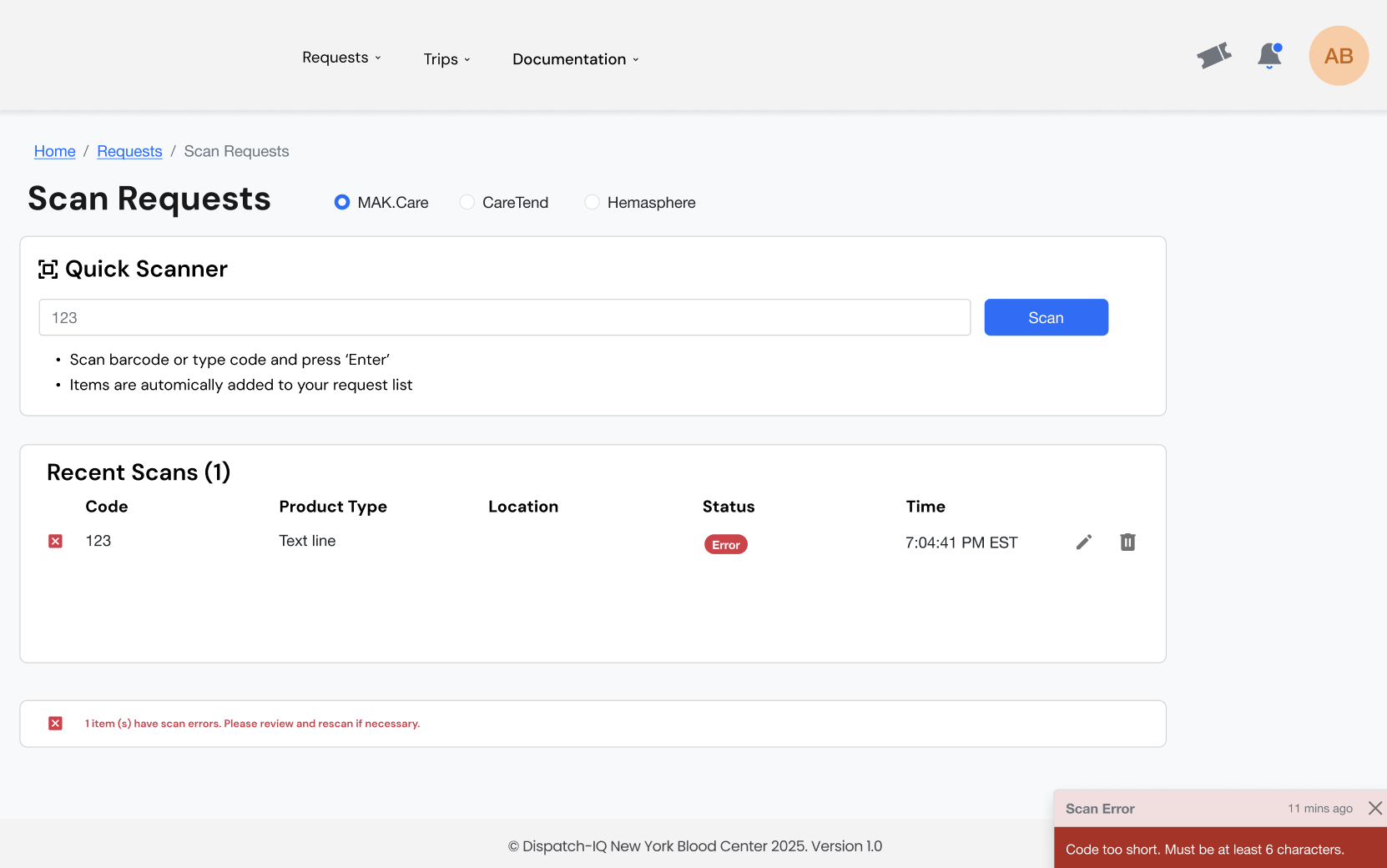
High-volume dispatch requests shouldn't require repetitive data entry. I designed a barcode-driven workflow that leverages trusted system data to automatically populate request information, allowing users to verify and submit requests quickly. This approach improves efficiency, reduces errors, and standardizes request quality across the organization.
AUTOMATING REQUEST CREATION
-
![]()
Scan Barcode
User scans the barcode to automatically create a request.
-
![]()
Success
User sees the request created and ready to manage.
-
![]()
Fail
User is alerted to an error and guided to fix or remove it.
-
![]()
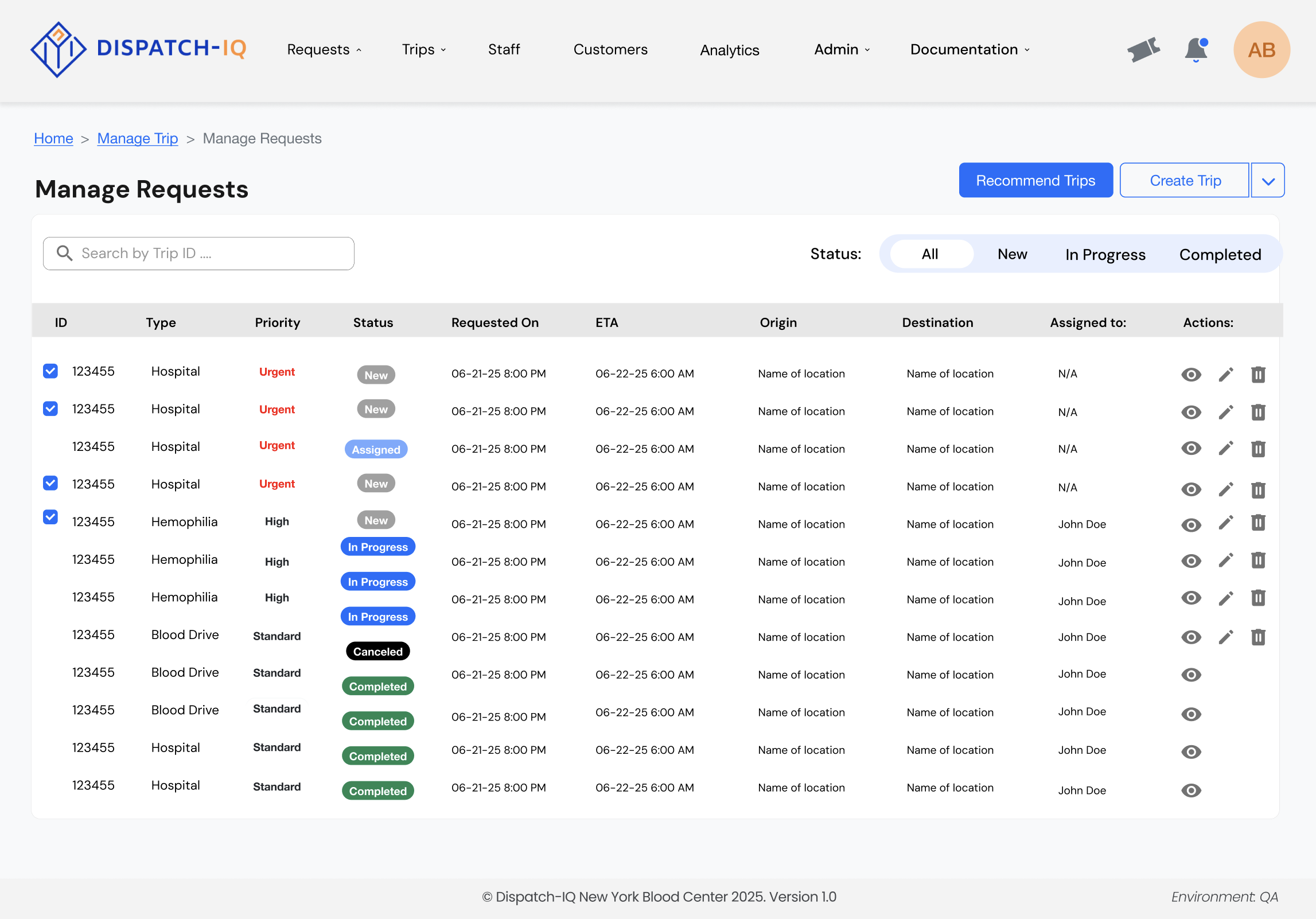
Request List
Everytime a request is made it goes to the ‘Manage Request’ List, where an admin can choose to add to a Trip.
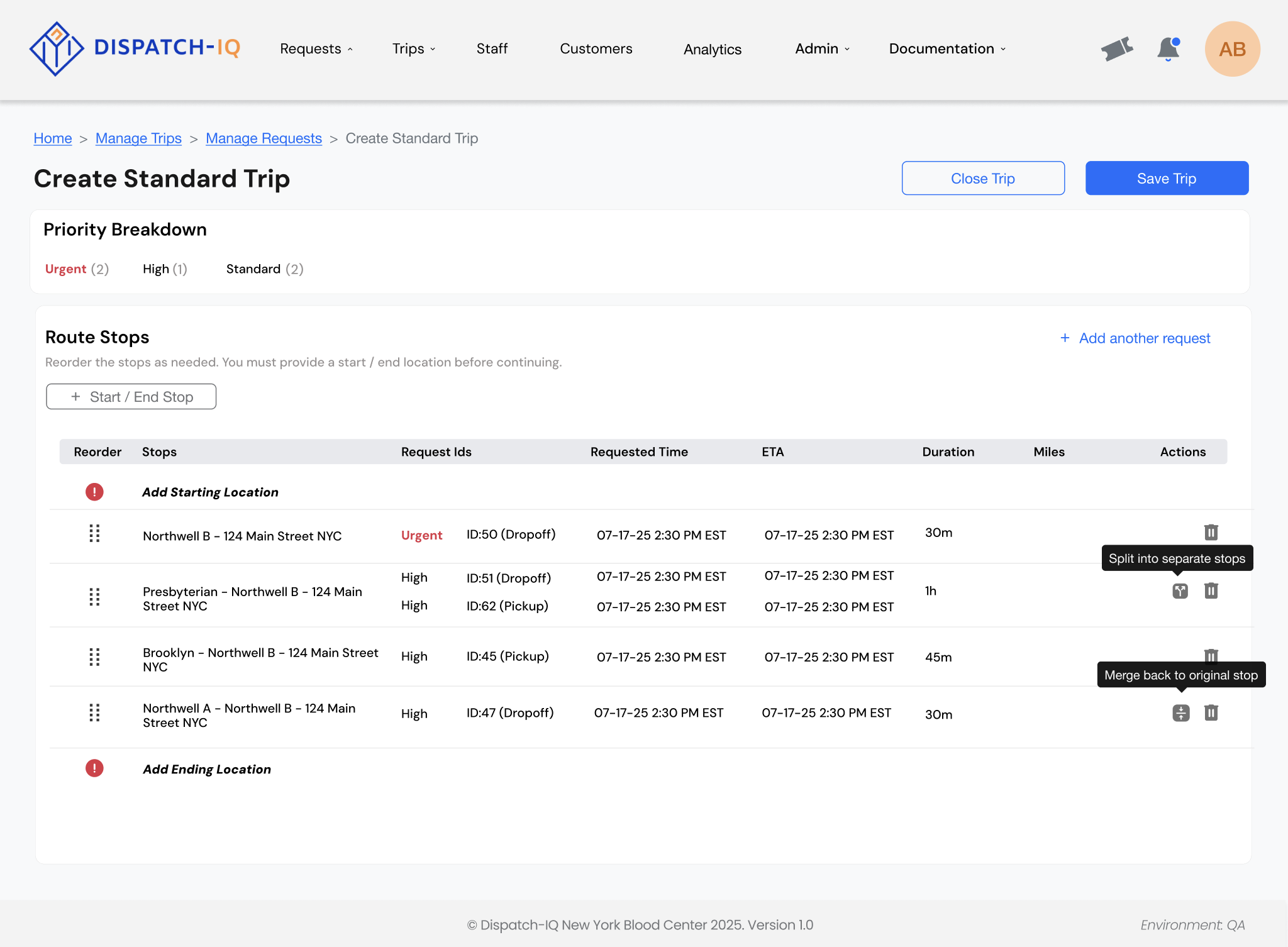
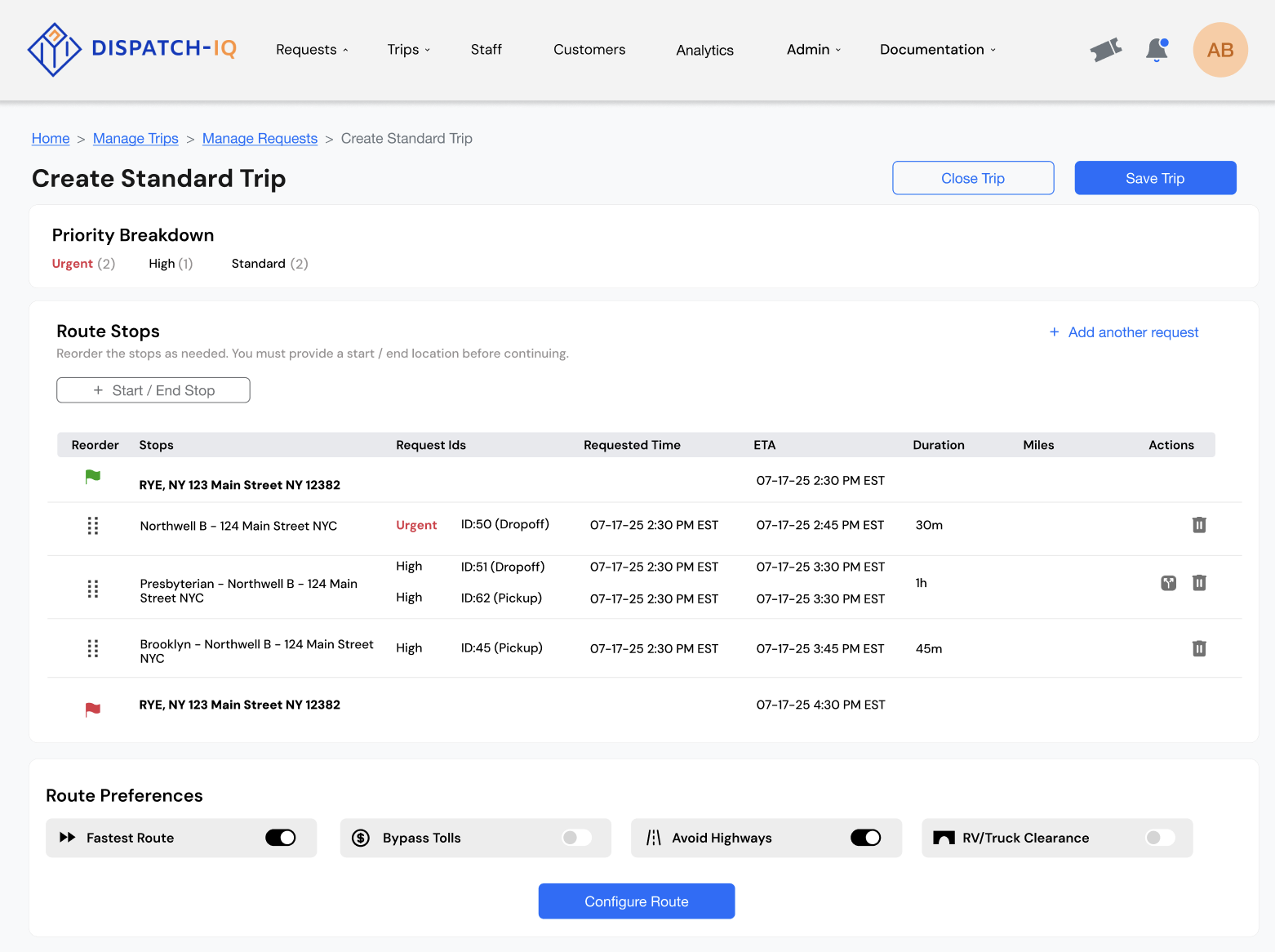
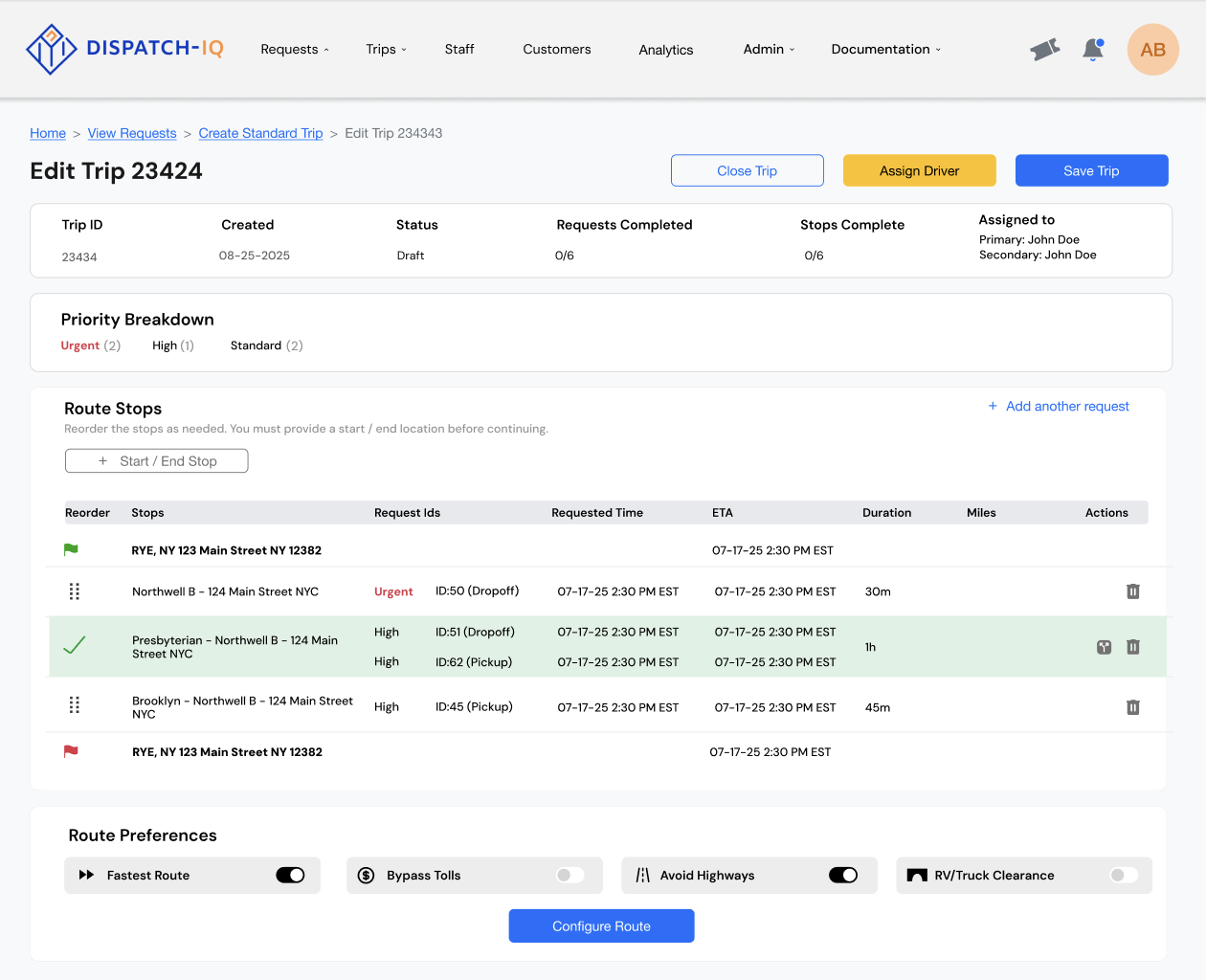
Dispatchers needed a faster, more reliable way to transform individual requests into executable delivery routes. I designed a guided trip creation experience that consolidates multiple requests into a single trip while enforcing operational guardrails throughout the process. By combining drag-and-drop route planning, automated validations, and system-generated Trip IDs, the workflow reduces manual coordination, improves data quality, and ensures trips are ready for drivers with confidence.
TRIP CREATION FLOW
-
![]()
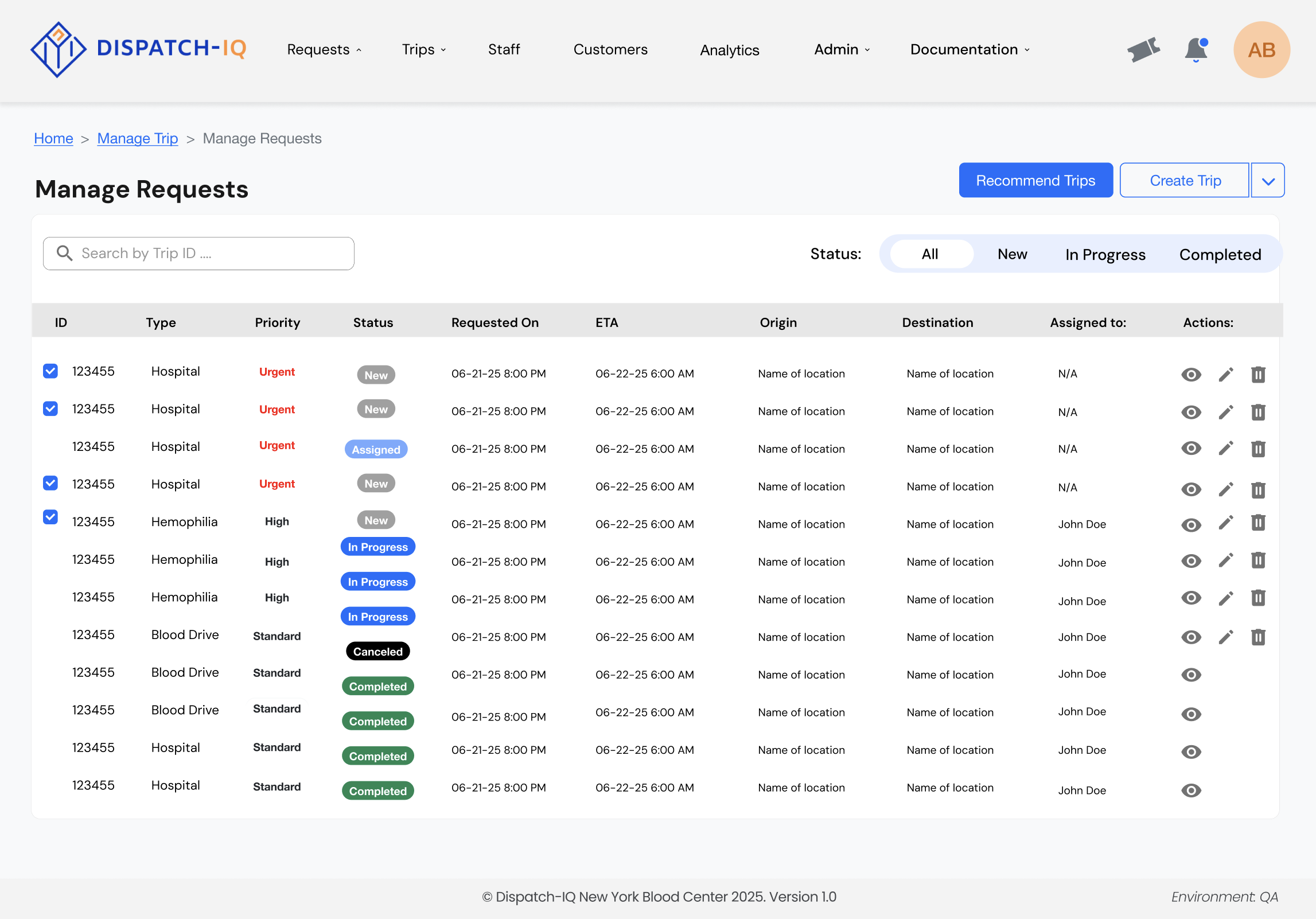
Start with Manage Requests
User selects one or more requests to begin building a trip.
-
![]()
Begin Trip Without Start/End
User starts the trip flow and is prompted to add missing locations.
-
![]()
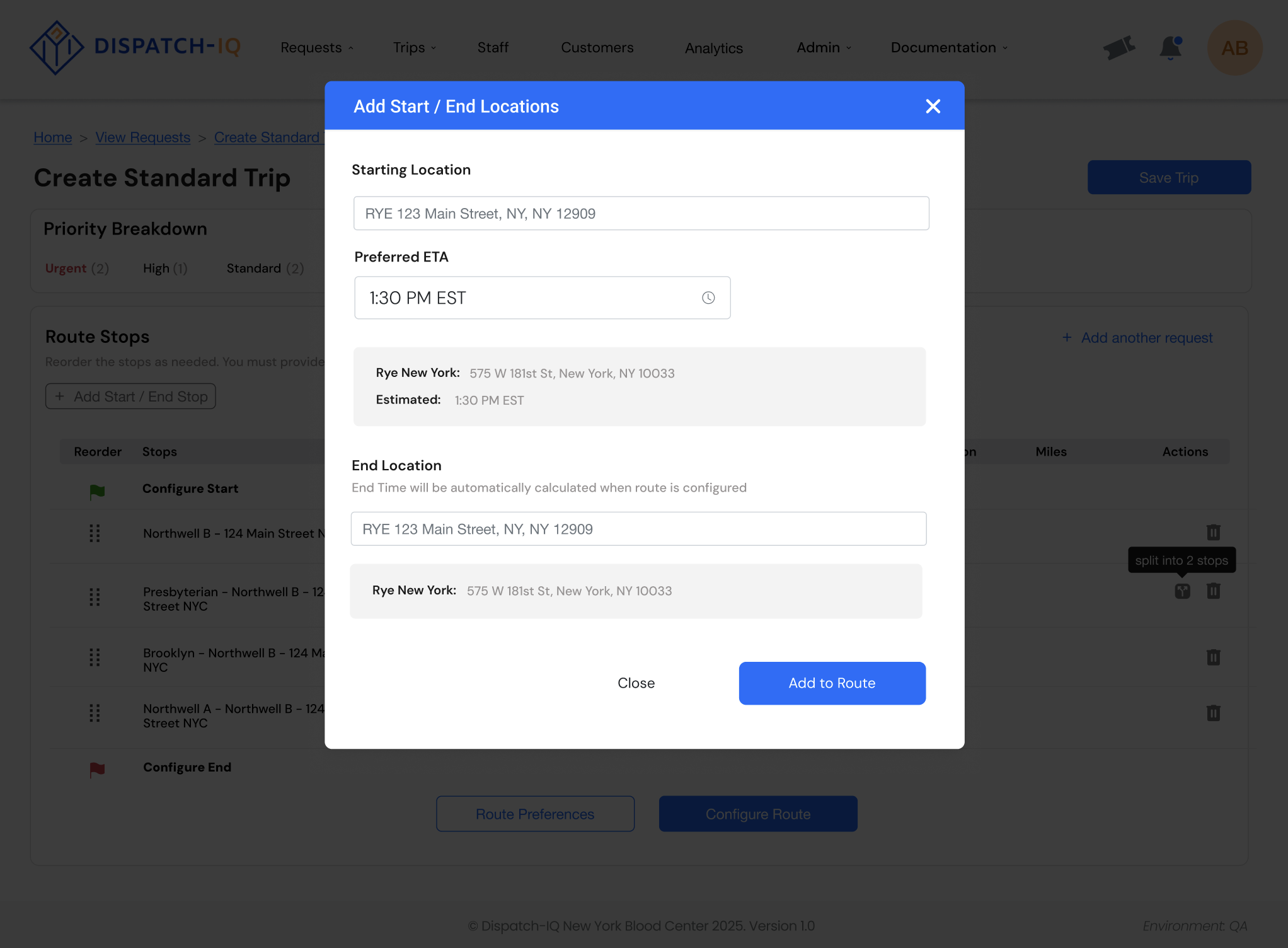
Add Start and End Locations
User enters where the route should begin and end.
-
![]()
Trip Ready to Save
User sees all required locations added and the trip becomes valid.
-
![]()
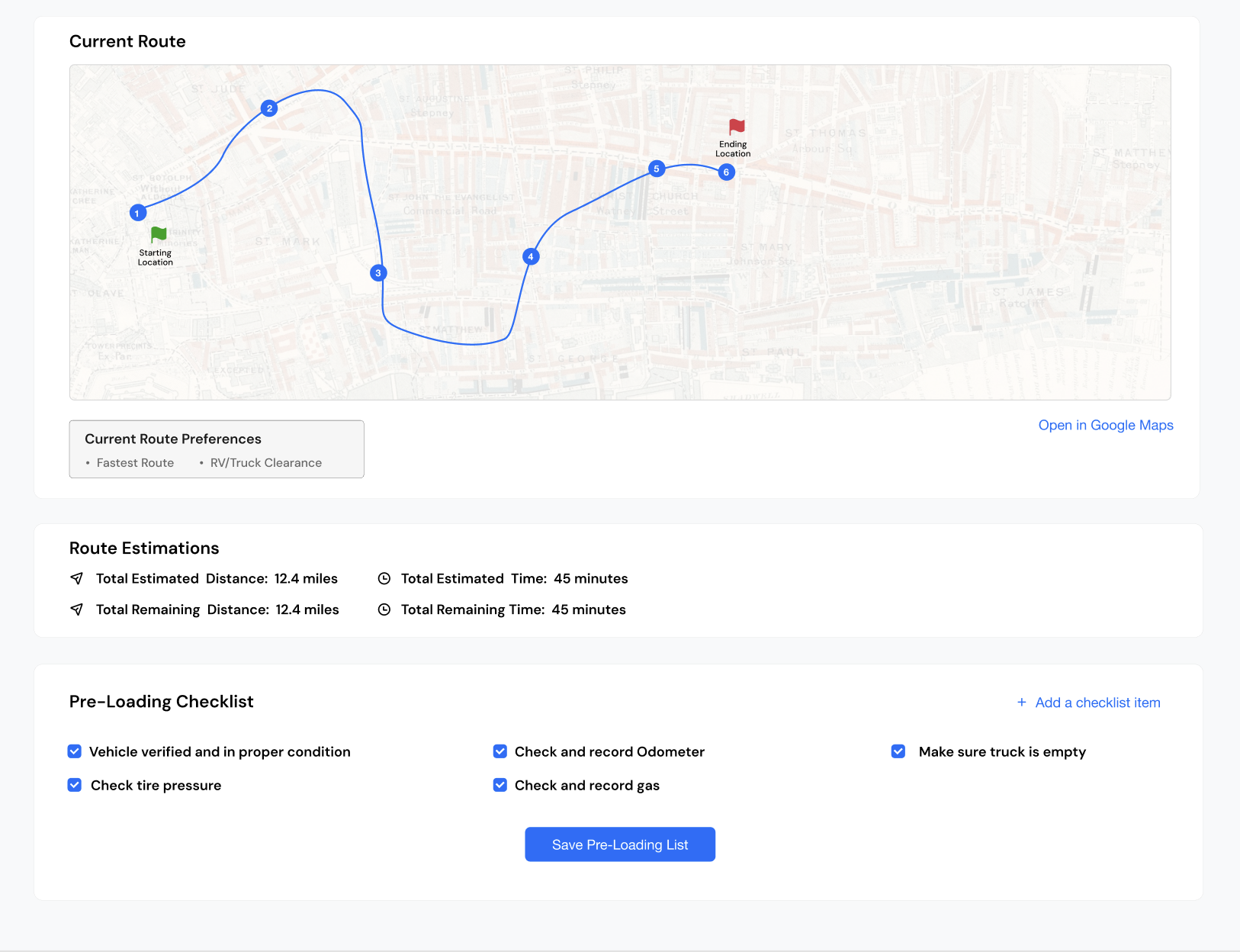
Trip Breakdown
User reviews the route, map, stops, and estimated arrival times.
-
![]()
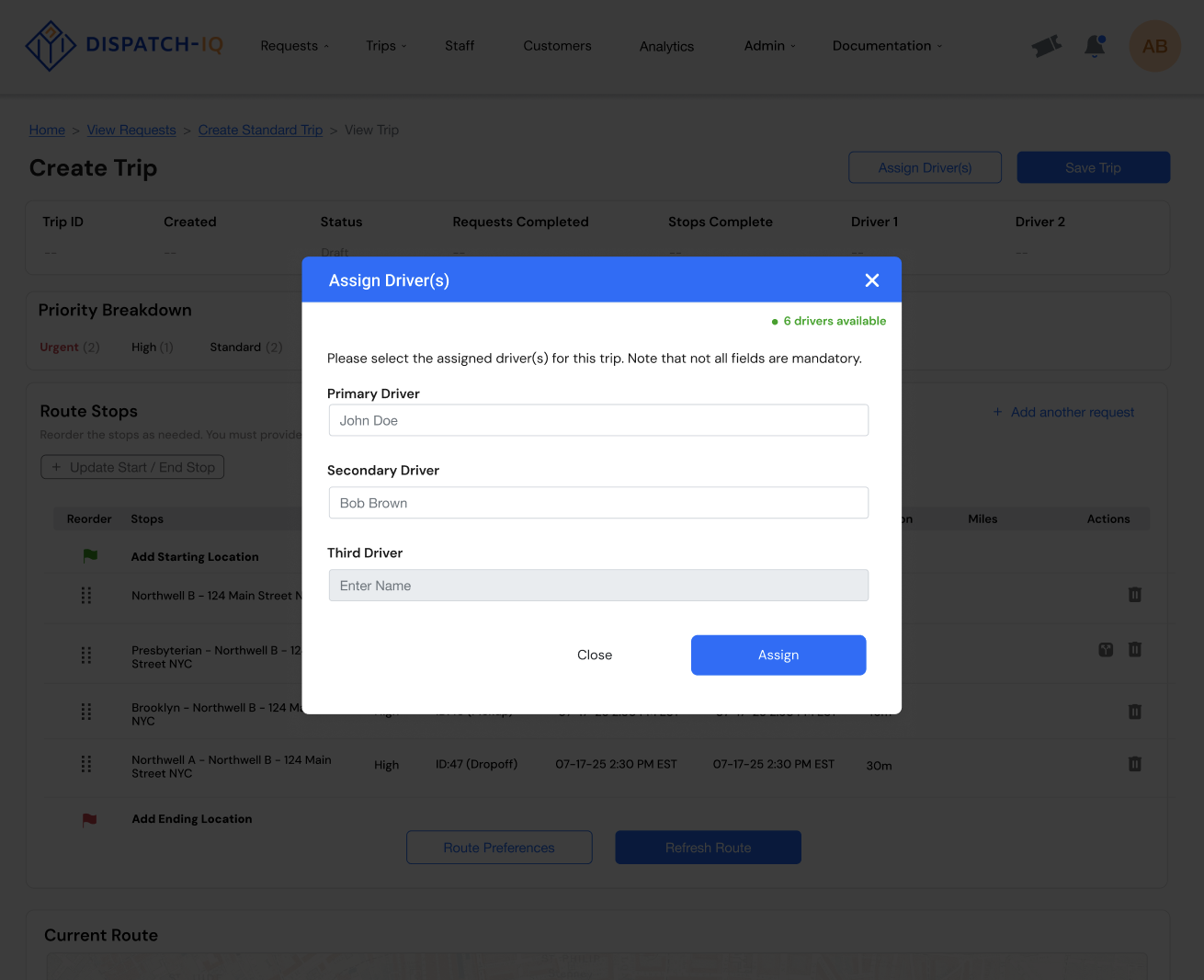
Assign Drivers
User assigns one or more drivers to run the trip.
-
![]()
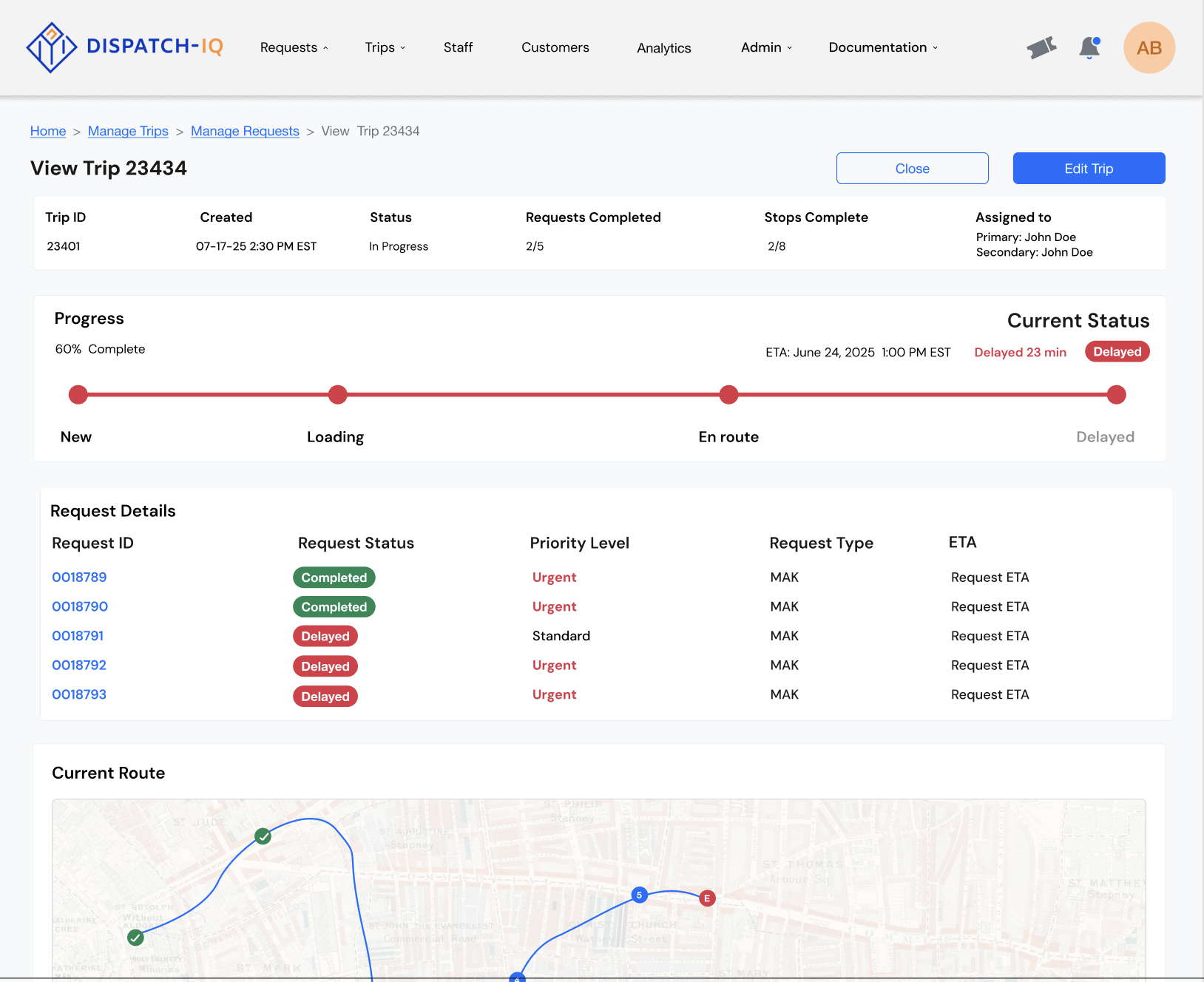
Live Trip View
User monitors progress and sees delays or changes in real time.
-
![]()
User watches each stop check off as the driver completes it.
Description goes here -
![]()
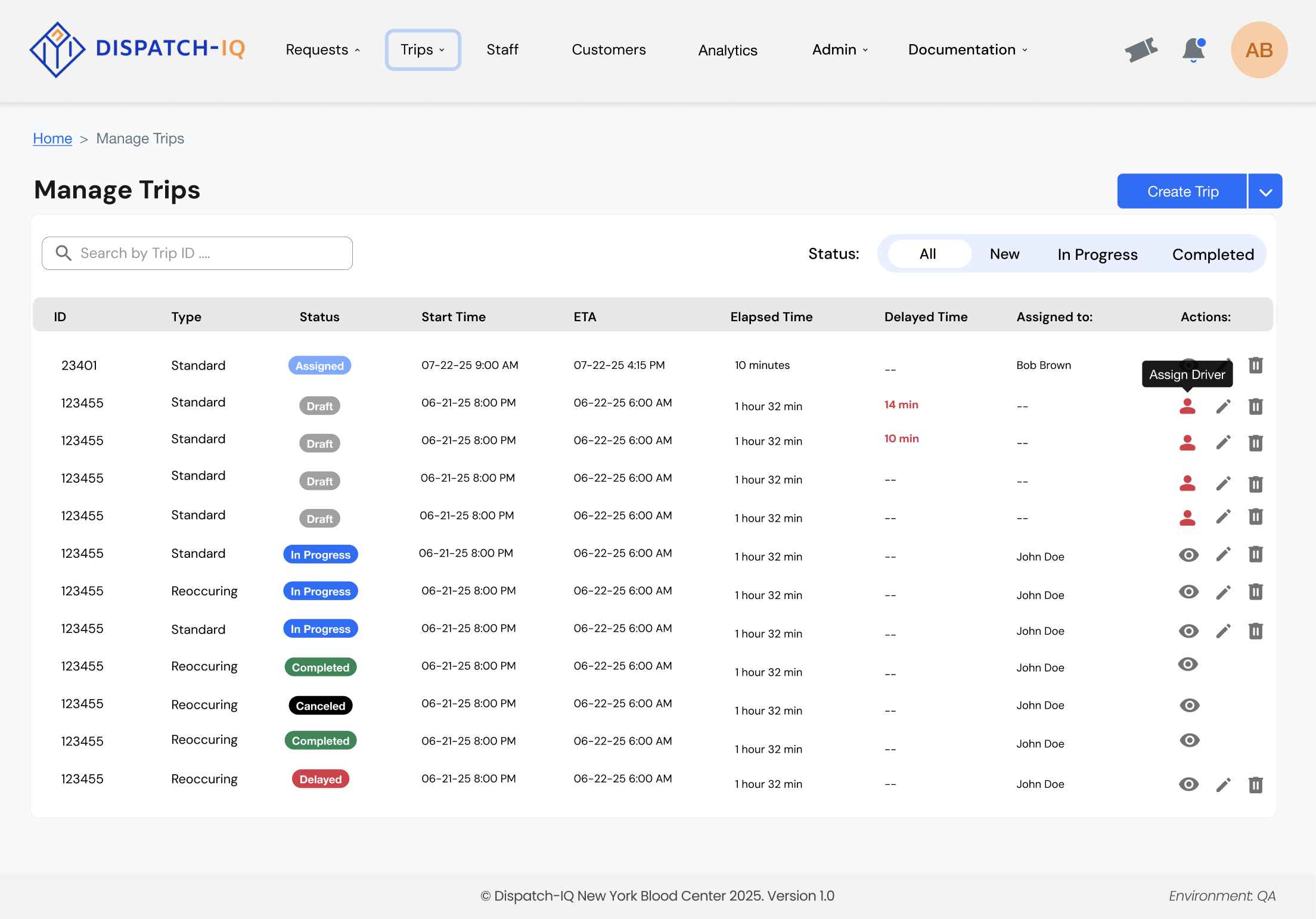
Manage Trips List
User views all active and completed trips in one place.
Designed an AI-assisted workflow that helps dispatchers build optimized delivery routes with confidence. Working closely with Data Science, I translated complex optimization logic into intuitive recommendations, enabling users to review, adjust, and approve suggested trips through clear visual hierarchy, meaningful system feedback, and transparent decision points.
AI DRIVEN TRIP RECOMMENDATIONS
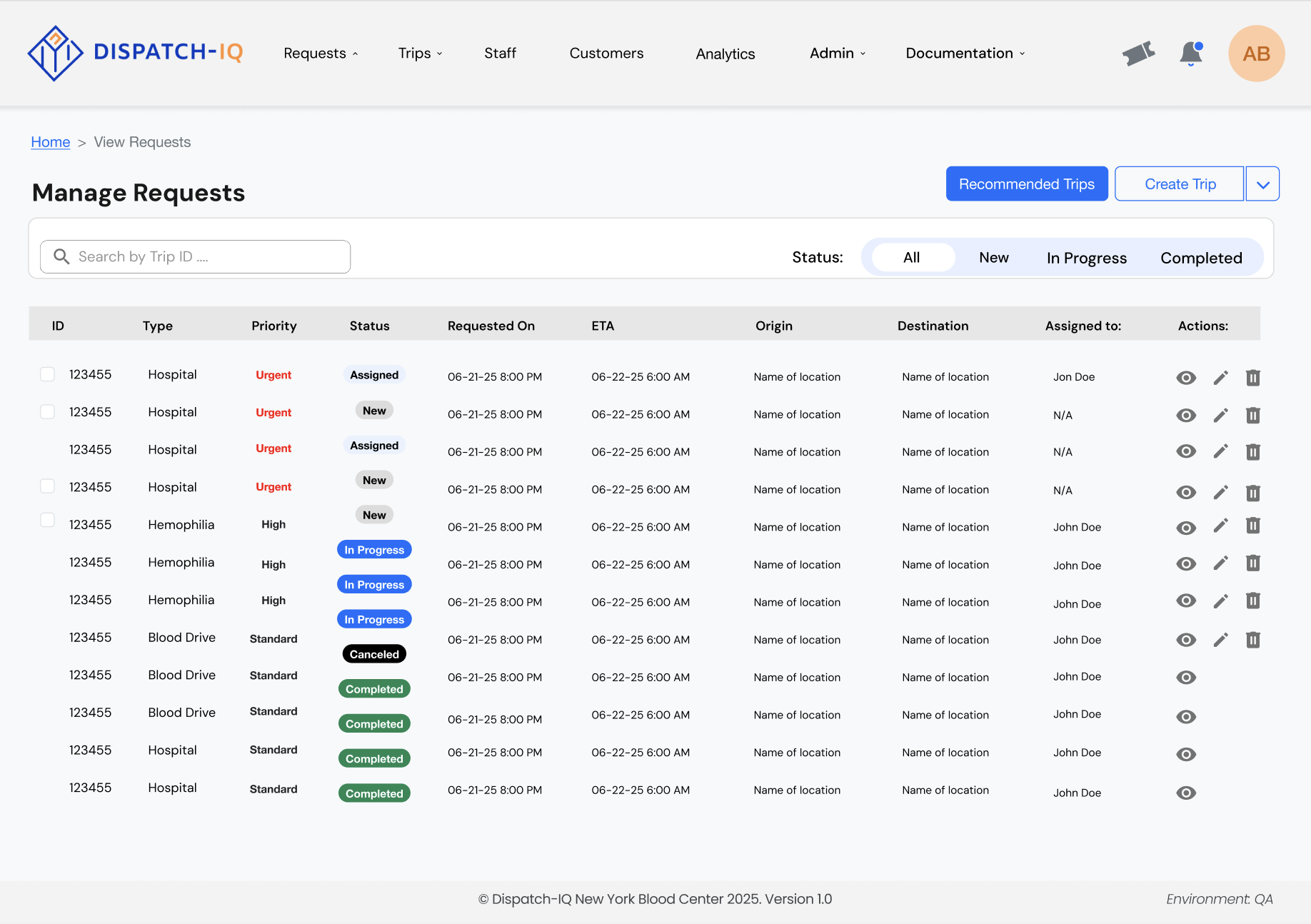
From Requests to Recommendations — Instead of introducing a separate AI experience, I integrated recommendations into the existing Manage Requests workflow. This reduced context switching, preserved familiar user behaviors, and made AI a natural extension of the dispatch process.
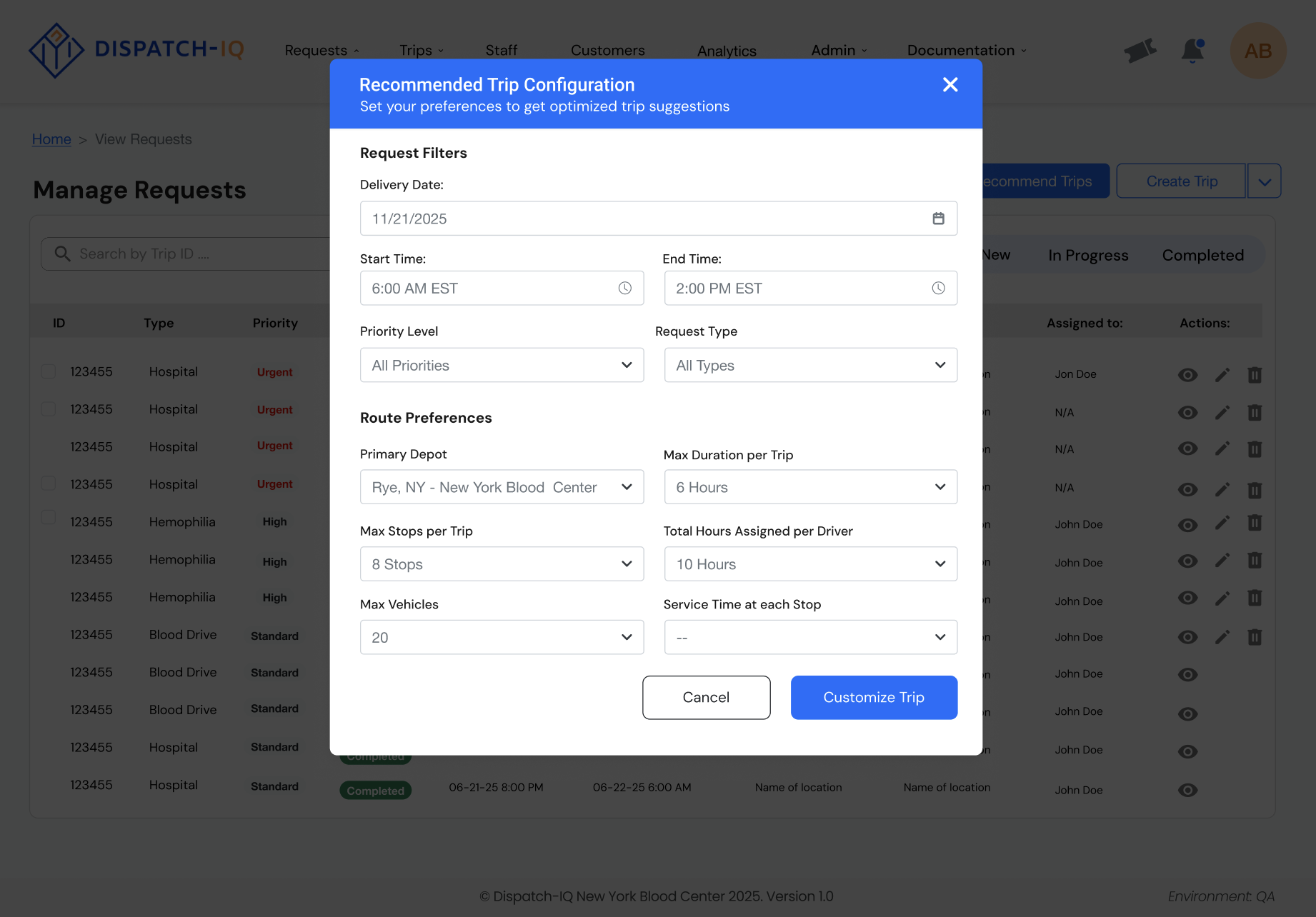
Trip Constraints & AI Inputs — I designed a configurable constraint model that allows dispatchers to define the business rules driving AI recommendations. Inputs such as date range, priority, service time, trip duration, and vehicle limitations ensure optimized routes remain practical, explainable, and aligned with operational needs.
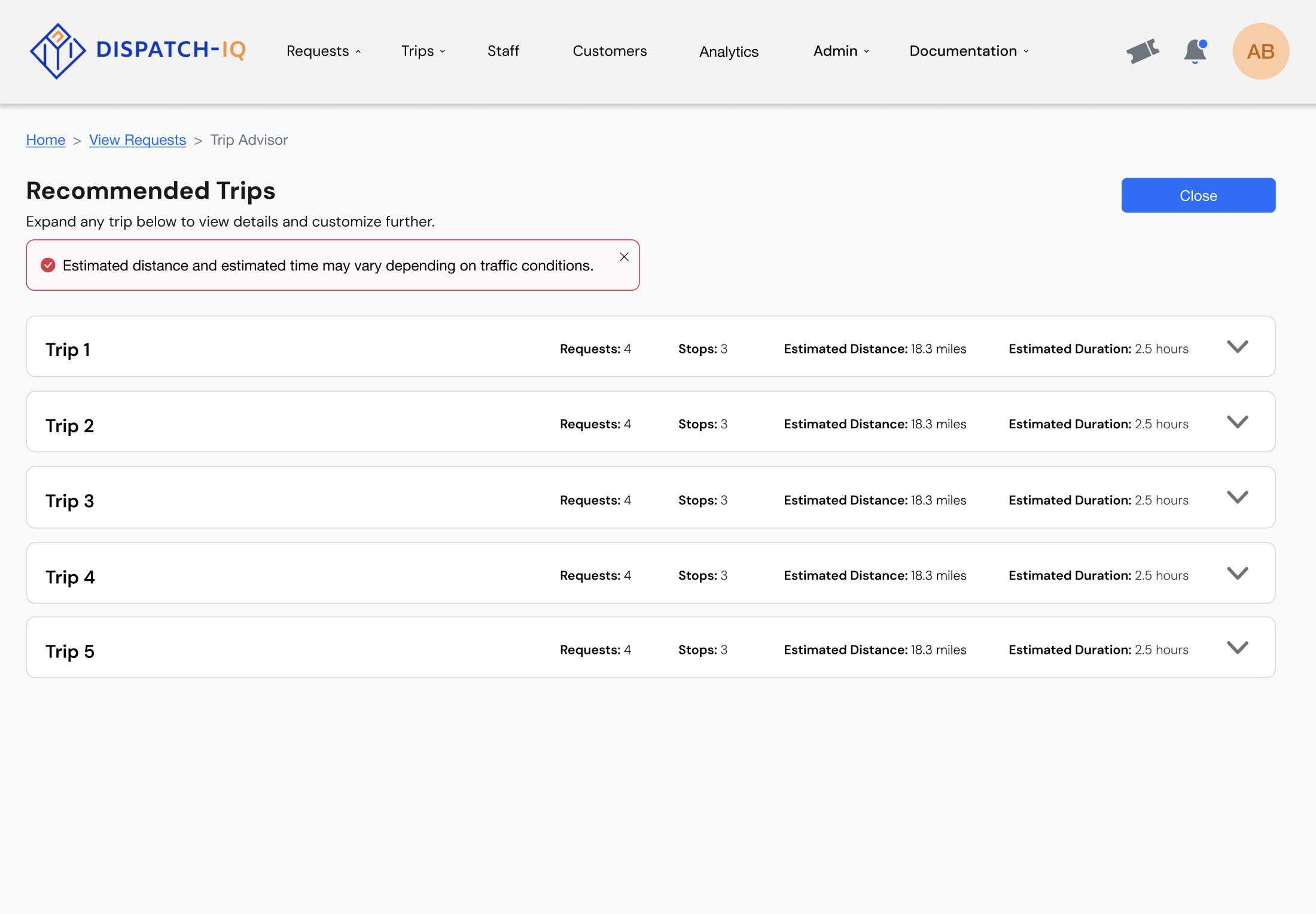
AI-Generated Recommendations — Instead of producing a single "correct" route, the system presents multiple optimized trip recommendations that dispatchers can compare and act on. Live operational alerts communicate when ETAs shift due to traffic or changing conditions, making the AI more transparent, predictable, and trustworthy.
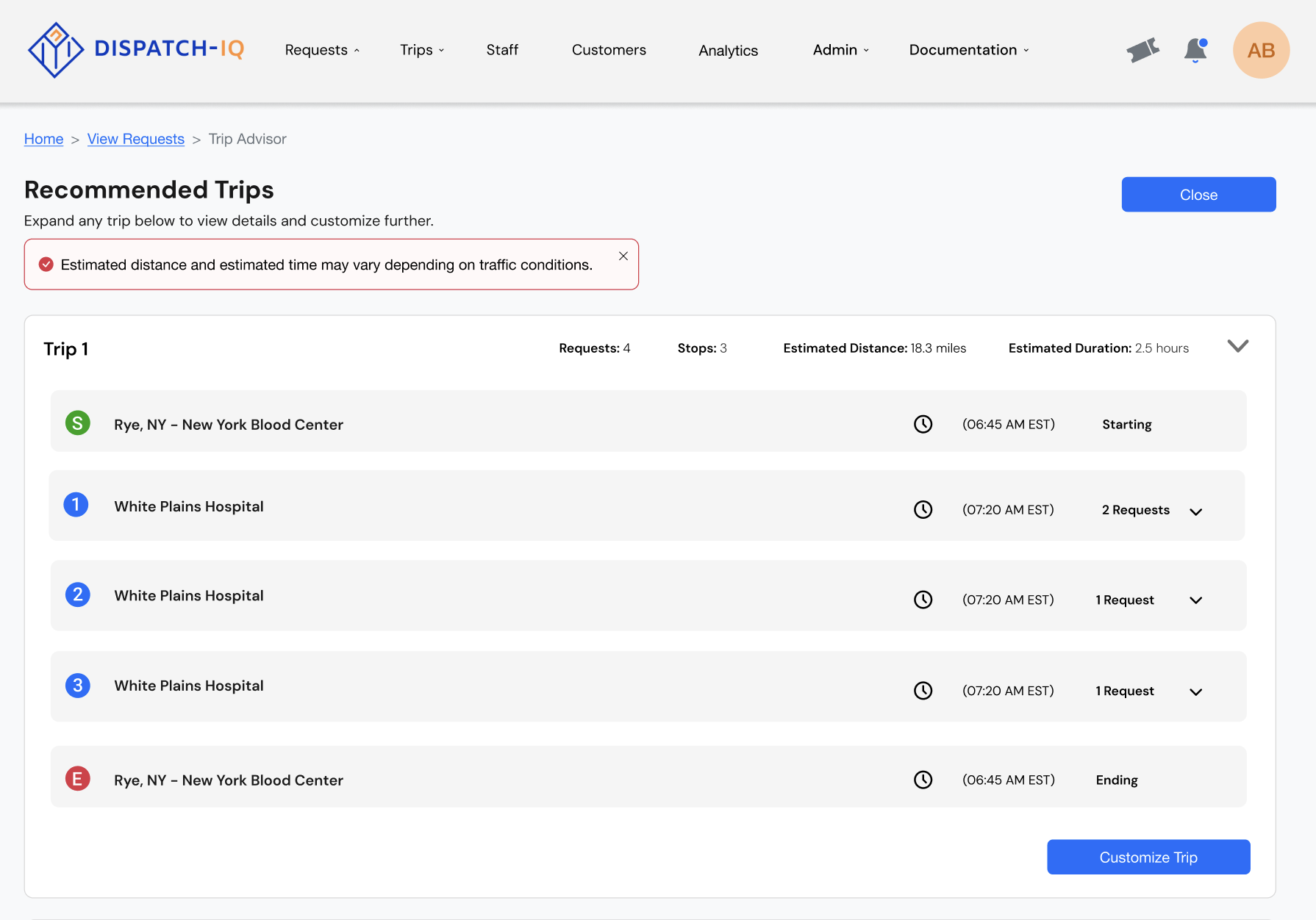
Expandable Trip Previews — To improve trust and reduce decision time, each AI recommendation expands into a clear overview of stops, locations, and route progression before assignment. This enables dispatchers to quickly validate recommendations without losing context or interrupting their workflow.
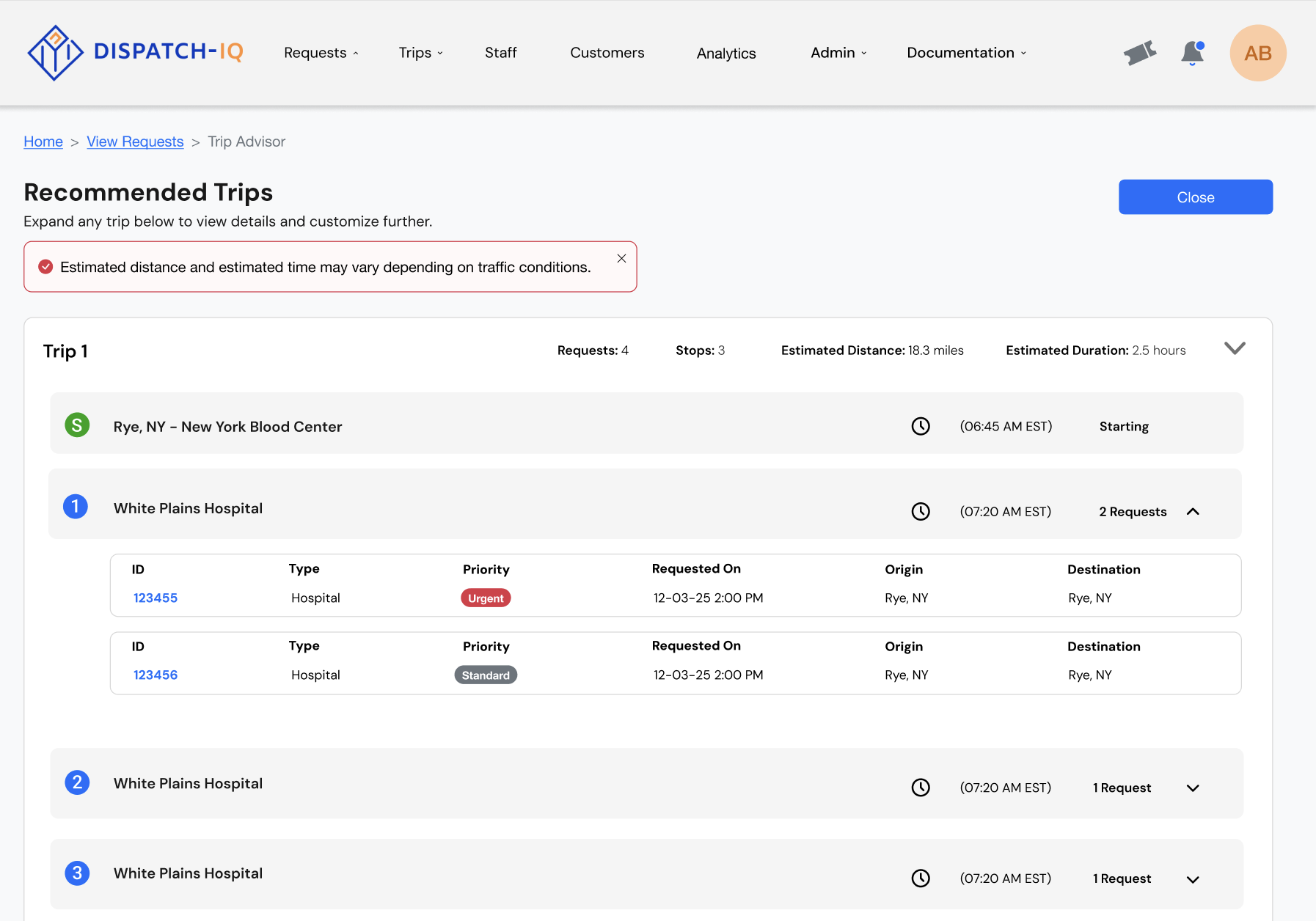
Request-Level Breakdown — I designed each recommendation to be fully explorable, allowing dispatchers to drill into individual requests without losing context. By exposing the underlying data behind every stop, the experience balances AI automation with transparency, control, and operational confidence.
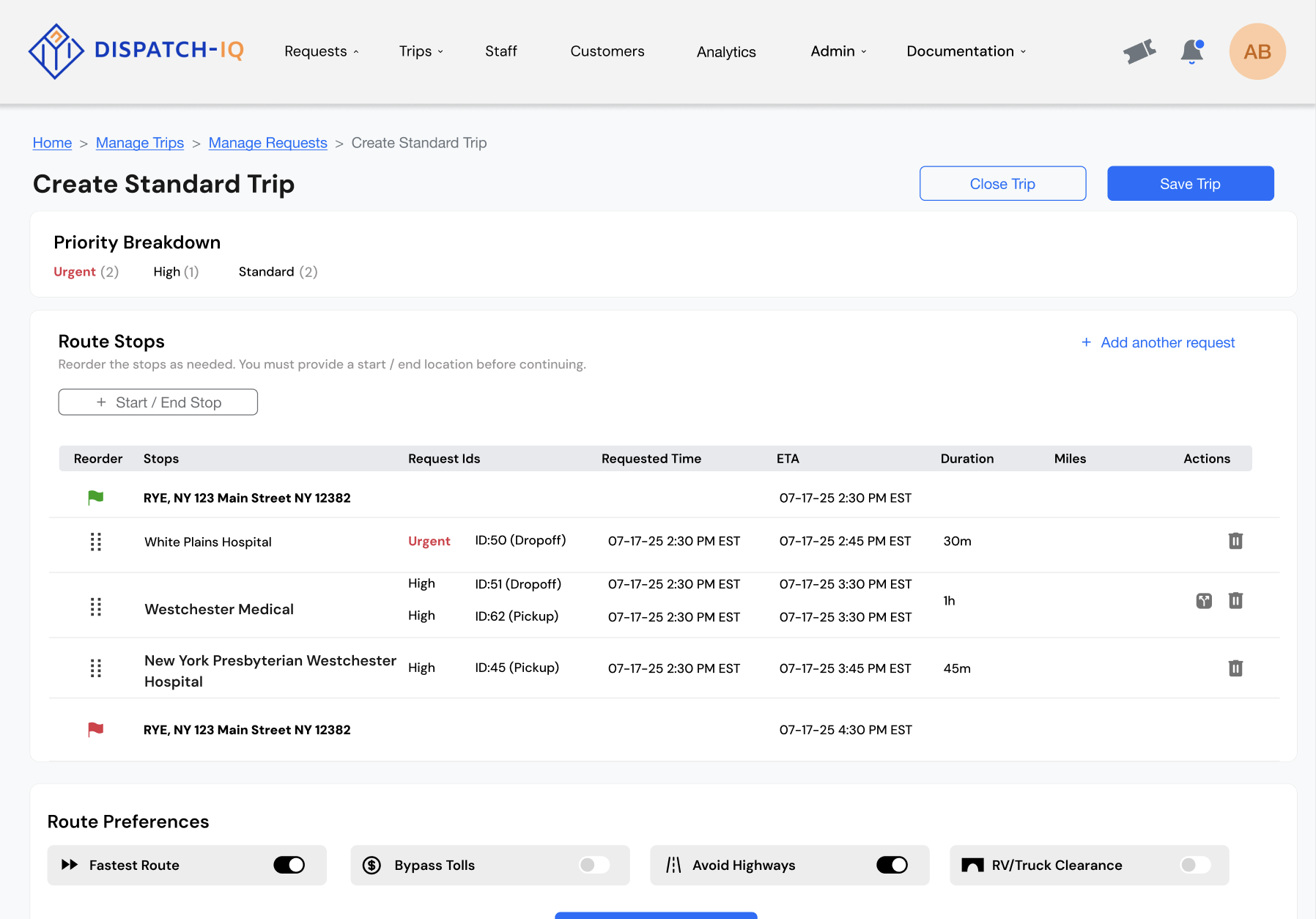
Ready for Driver Assignment — Once approved, AI-generated trips transition seamlessly into the existing driver assignment workflow. By integrating recommendations into familiar operational processes, the experience reduces training, minimizes disruption, and encourages adoption.
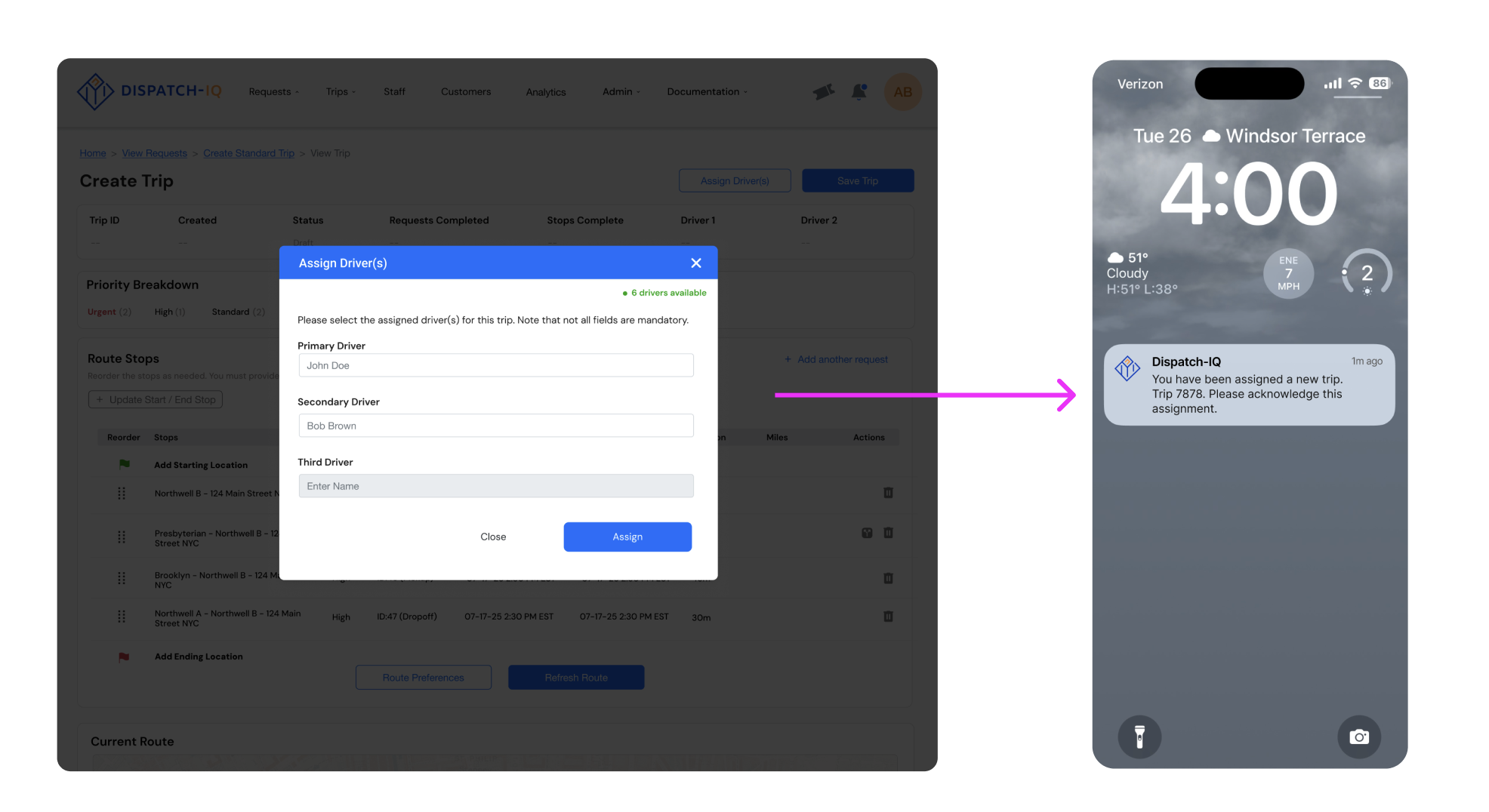
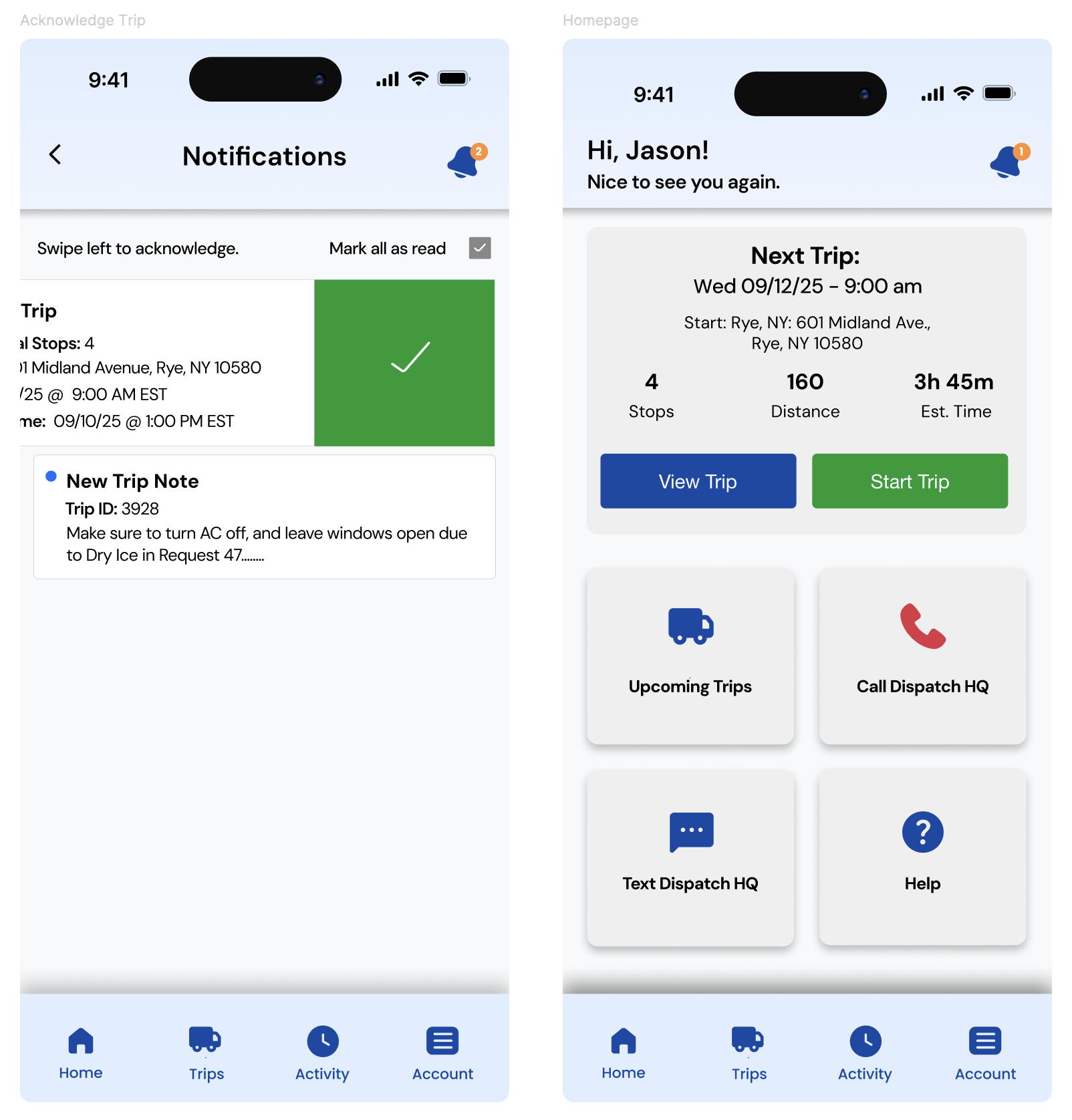
Dispatch and Driver applications were designed as a connected ecosystem rather than separate products. When a dispatcher assigns a trip, the Driver App is updated immediately through push notifications and live synchronization. This eliminates communication delays, reduces manual follow-up, and ensures drivers always have the latest assignment information.
REAL TIME ASSIGNMENT SYNCHRONIZATION
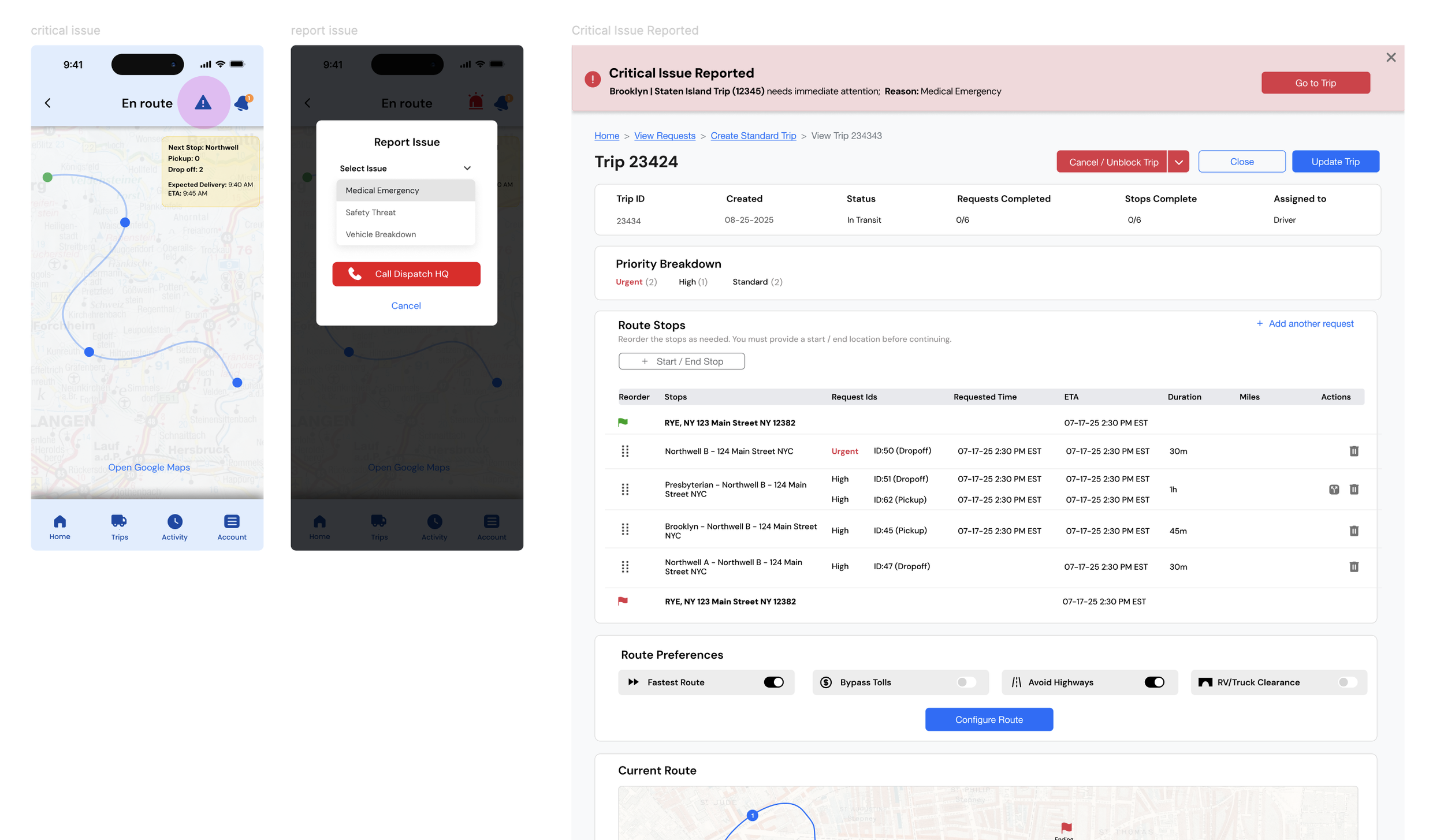
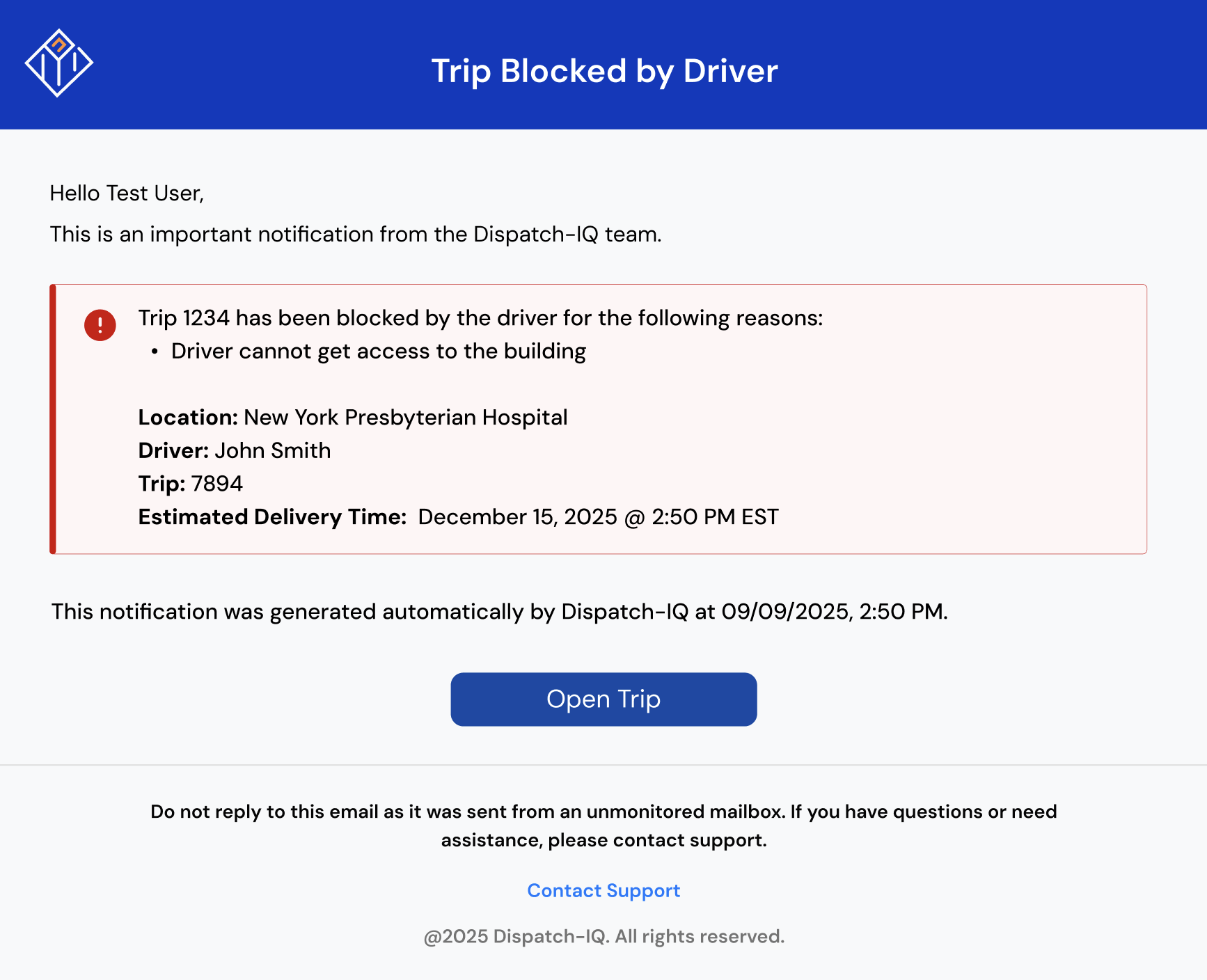
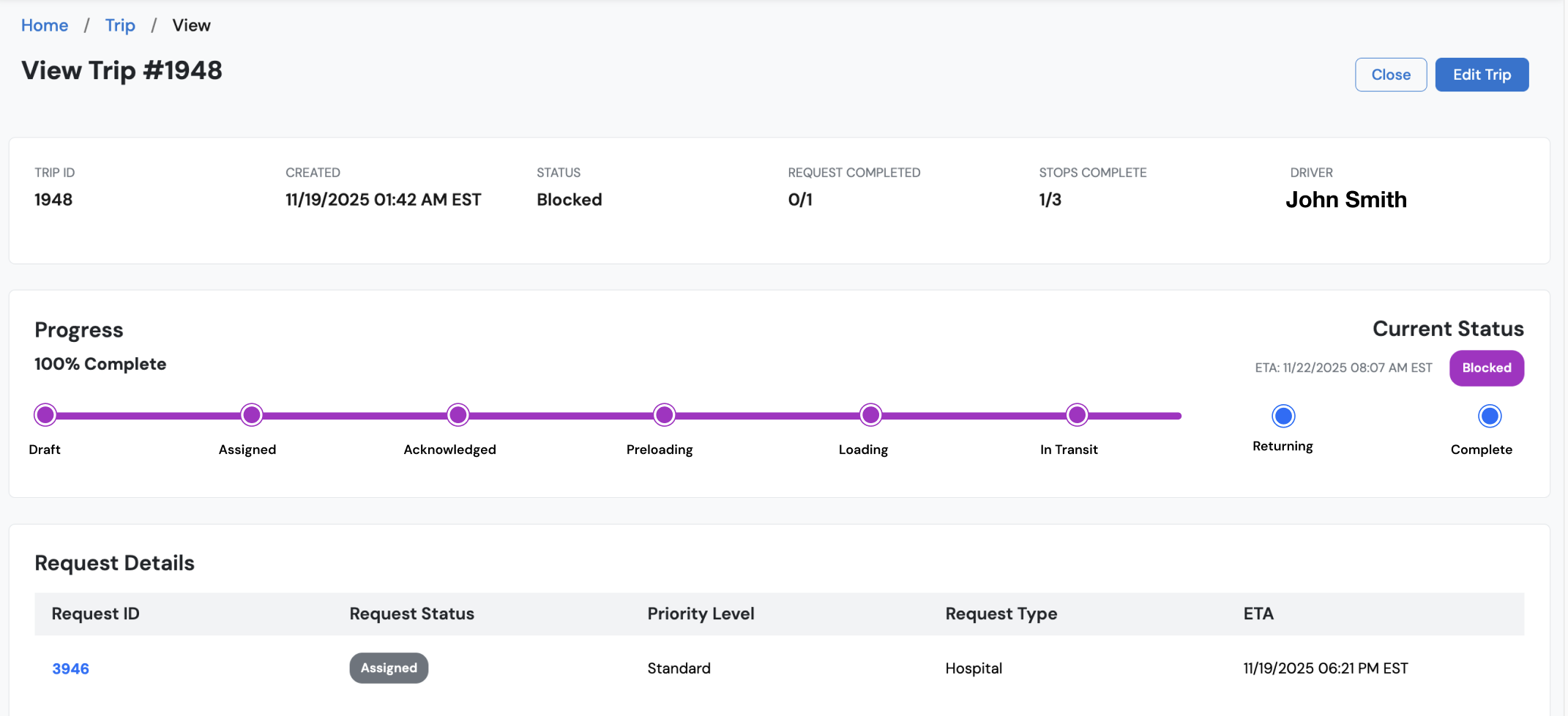
INSTANT SYSTEM-WIDE VISIBILITY INTO CRITICAL DRIVER ISSUES
This experience extends beyond a simple push notification. I designed a connected workflow where driver assignments, trip updates, and operational changes are synchronized across the Admin and Driver applications in real time. By keeping both experiences continuously aligned, the system reduces operational friction, improves responsiveness, and creates a reliable source of truth for dispatch teams and drivers.
Dispatch-IQ required more than designing interfaces—it required designing an operational ecosystem. Working closely with Product, Engineering, Data Science, QA, and Operations, I helped translate complex workflows, business rules, and AI recommendations into intuitive experiences that users could trust. By contributing to the underlying data structures, system behaviors, and decision logic alongside the interface, I helped create a scalable platform that supports faster, more informed operational decisions.
DESIGNING BEYOND THE INTERFACE
Dispatch-IQ continues to evolve through real-world validation with dispatchers and drivers. Future iterations will focus on refining AI-assisted routing, expanding operational insights, and strengthening the connection between dispatch operations and field teams. As the platform grows, the goal remains the same: reduce operational complexity while enabling faster, more informed decision-making across the organization.
WHAT’S NEXT